Cow Coloring Pages: Highland, Farm & Baby Calf Designs to Print
There’s a reason cow coloring pages show up in almost every classroom farm unit and rainy-afternoon activity list: the shapes are simple, the subject is familiar, and there’s enough variety between breeds to keep a child interested well past the first page. Whether it’s a rounded, friendly calf for a toddler or a detailed, shaggy-haired highland cow for an older kid or adult, this free, printable collection covers the full range, each design available as a high-resolution PDF that prints cleanly on US Letter or A4 paper, with no sign-up required.
Why the Cow Is a Farmyard Favorite for Coloring
Part of the appeal is how forgiving the shape is. A cow’s body is mostly large, rounded areas rather than fine detail, which makes it an easy starting point for a child who’s still building confidence with a crayon. At the same time, the black and white or brown and white patches common on many breeds give slightly older kids a genuinely fun coloring puzzle, since no two patch patterns need to look the same. A few real facts are worth sharing while your child works on a design:
- Every cow’s patch pattern is unique, similar to a human fingerprint, so no two real cows, or two coloring pages, ever need to match exactly.
- Cows are highly social animals and form close bonds within a herd, often developing what researchers describe as best-friend pairings with specific other cows.
- A cow’s stomach has four separate compartments, which allows it to digest tough grasses that most other animals can’t break down efficiently.
- Cows have a nearly 360-degree field of vision thanks to the position of their eyes, though they do have a small blind spot directly behind them.






What You’ll Find in This Cow Collection
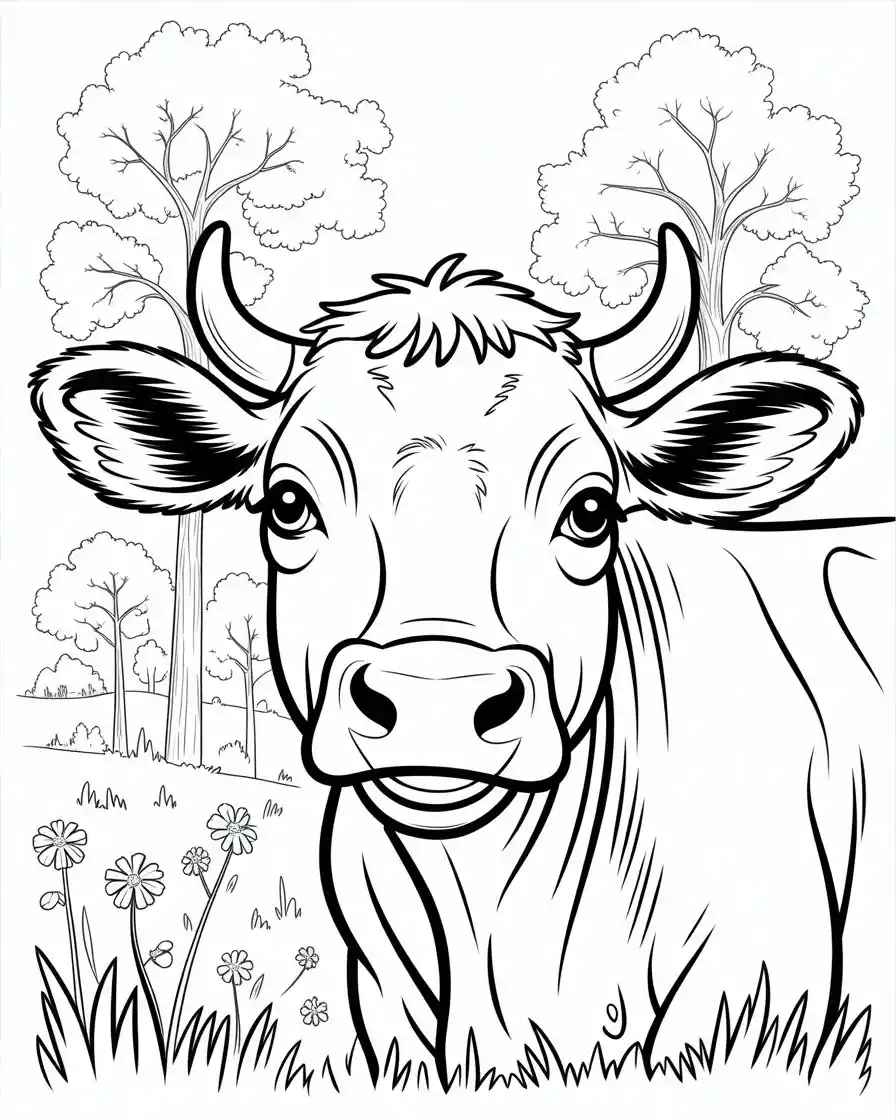
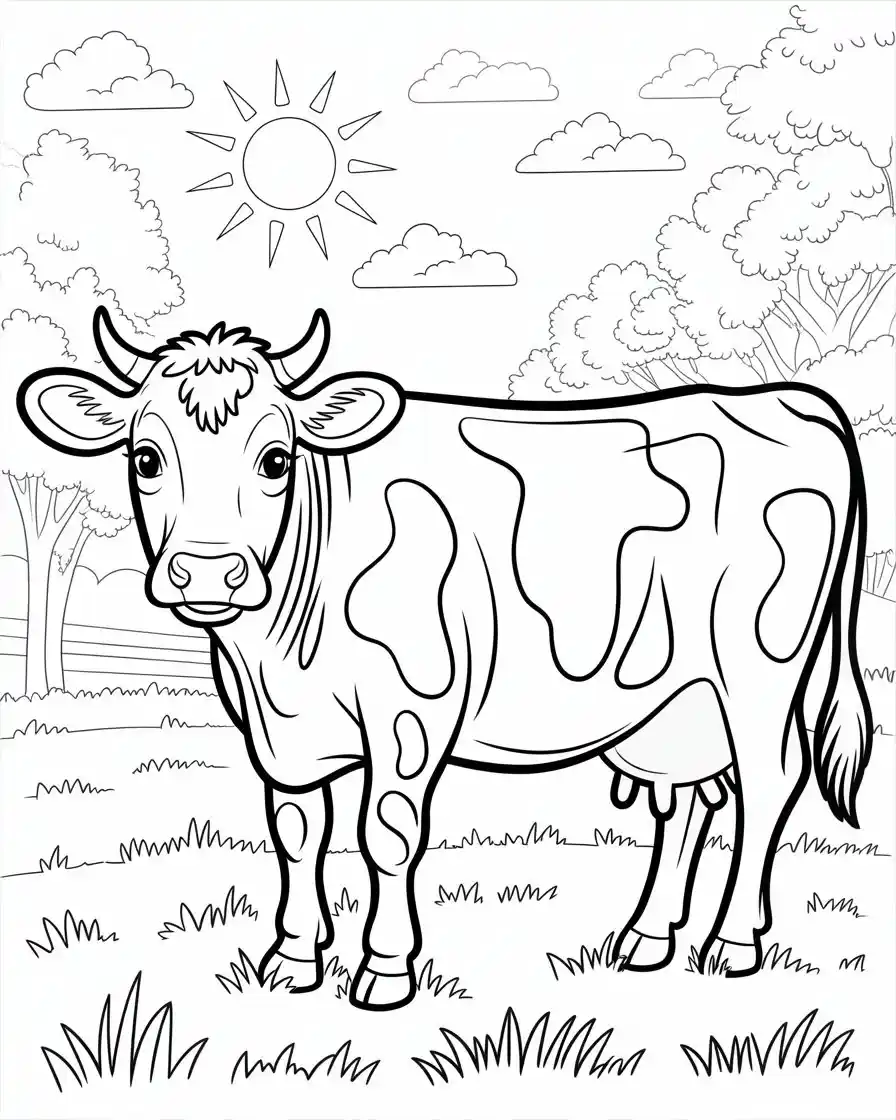
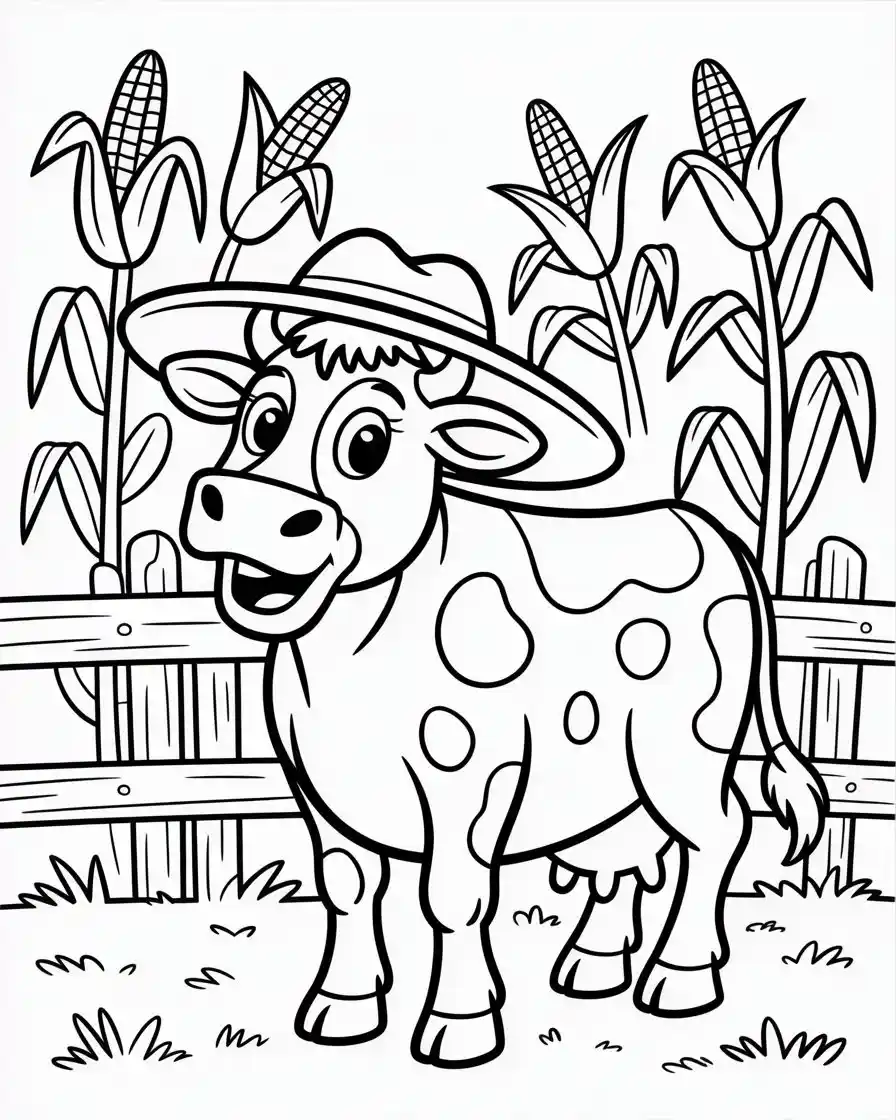
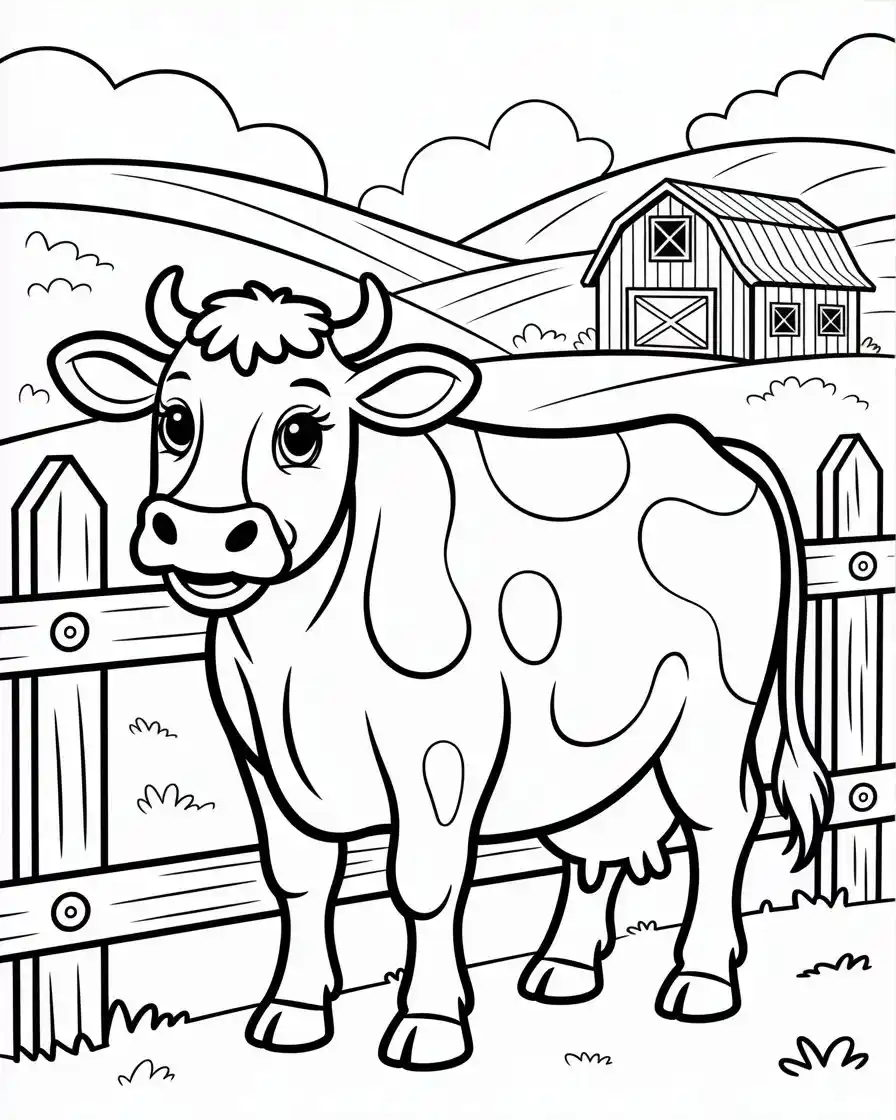
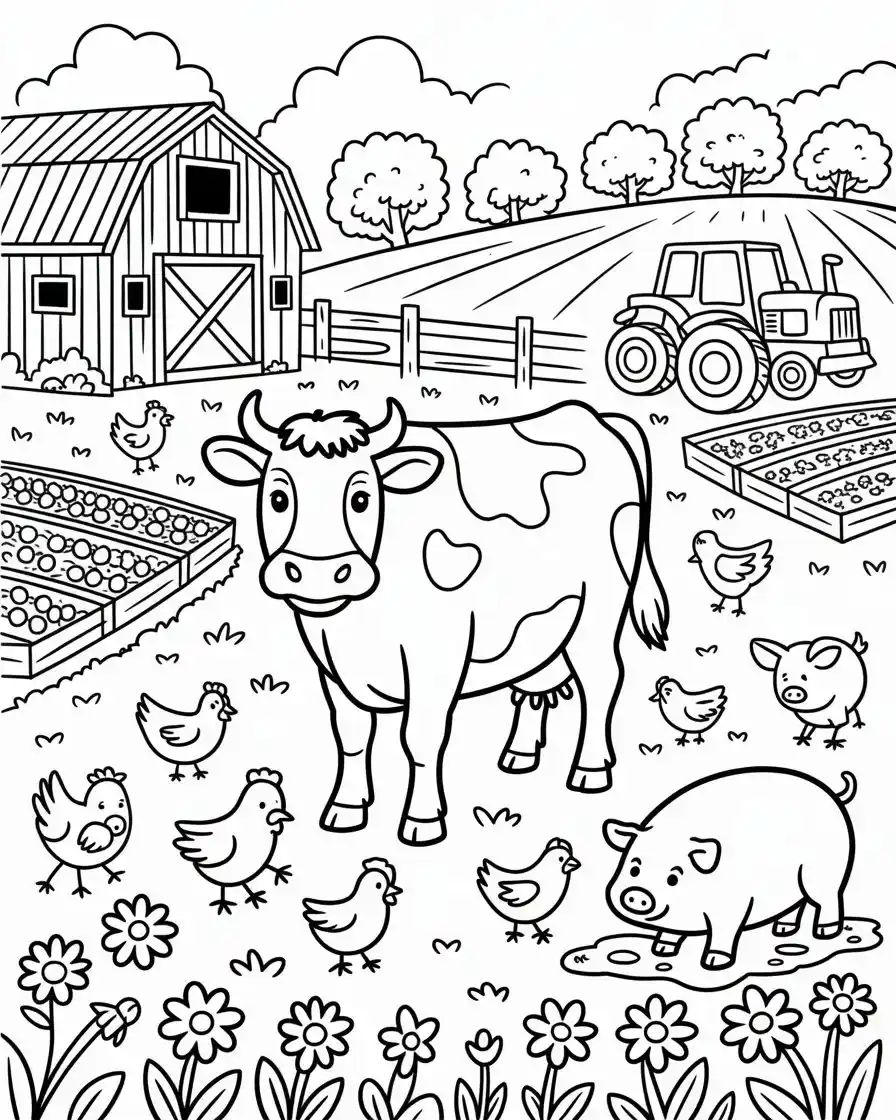
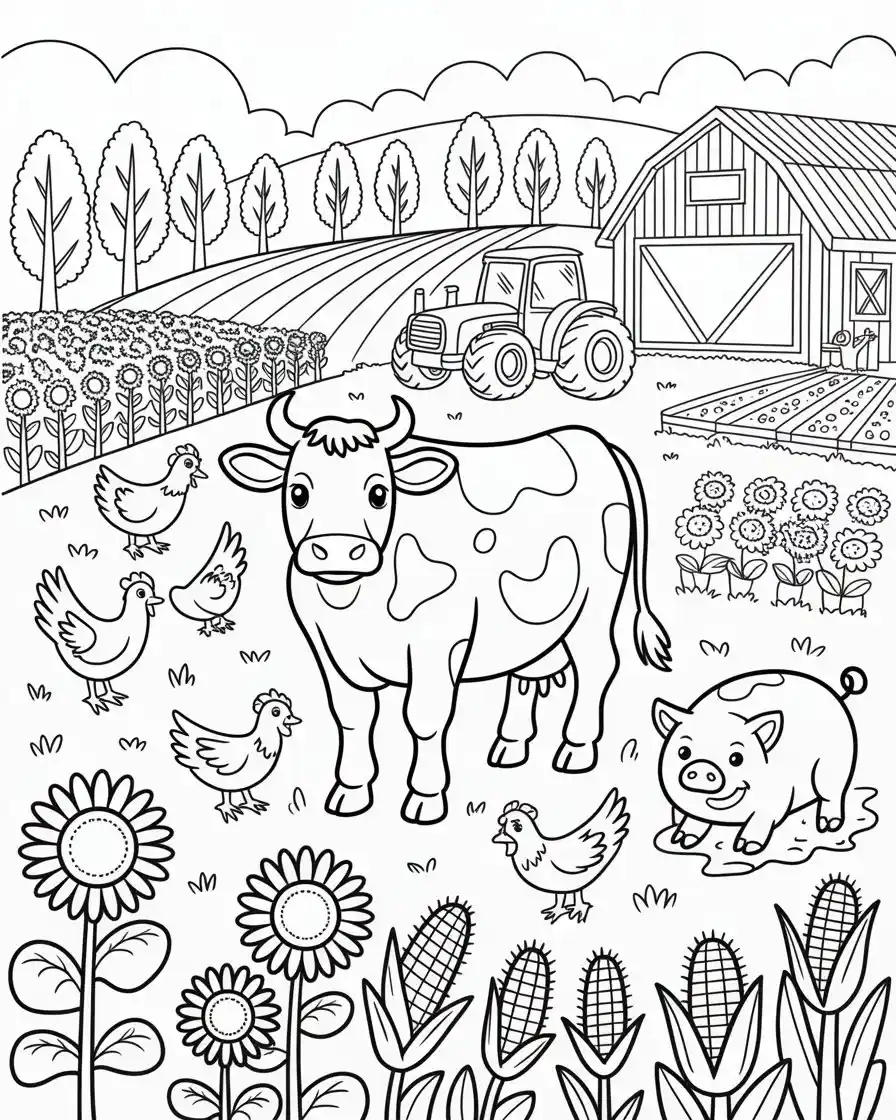
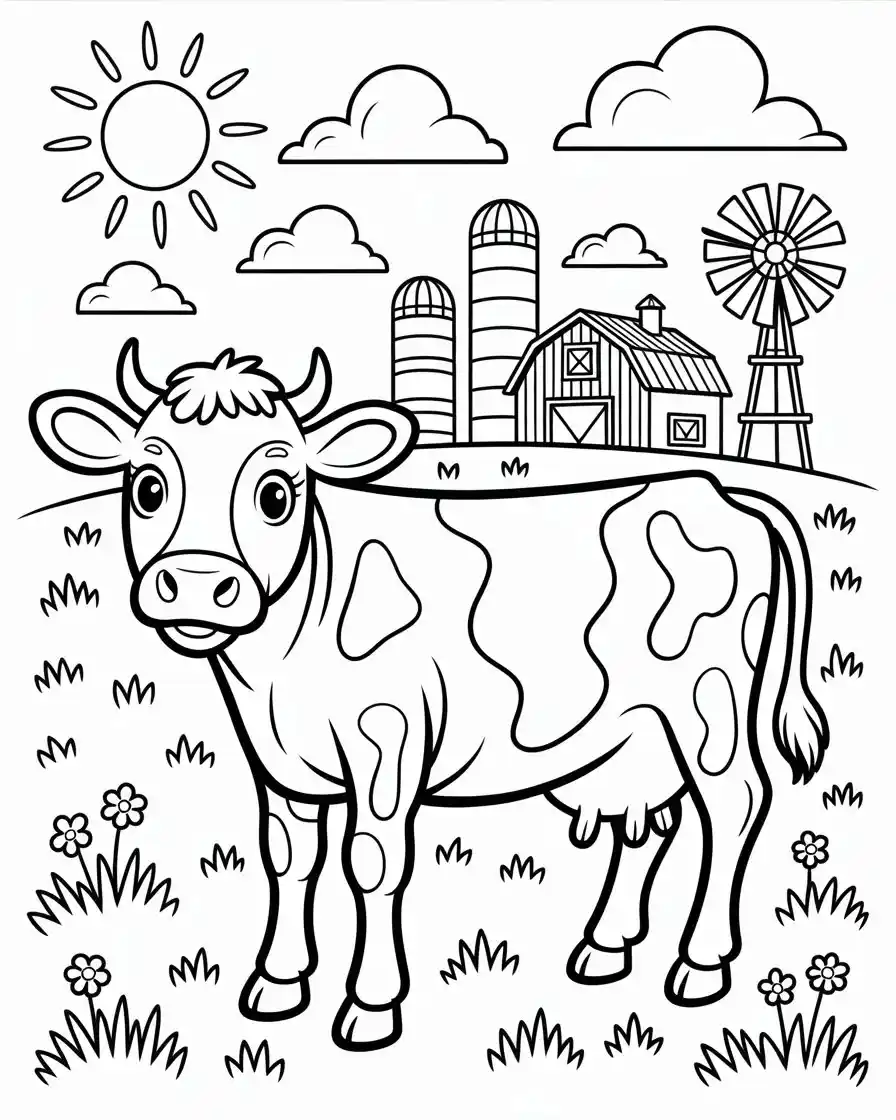
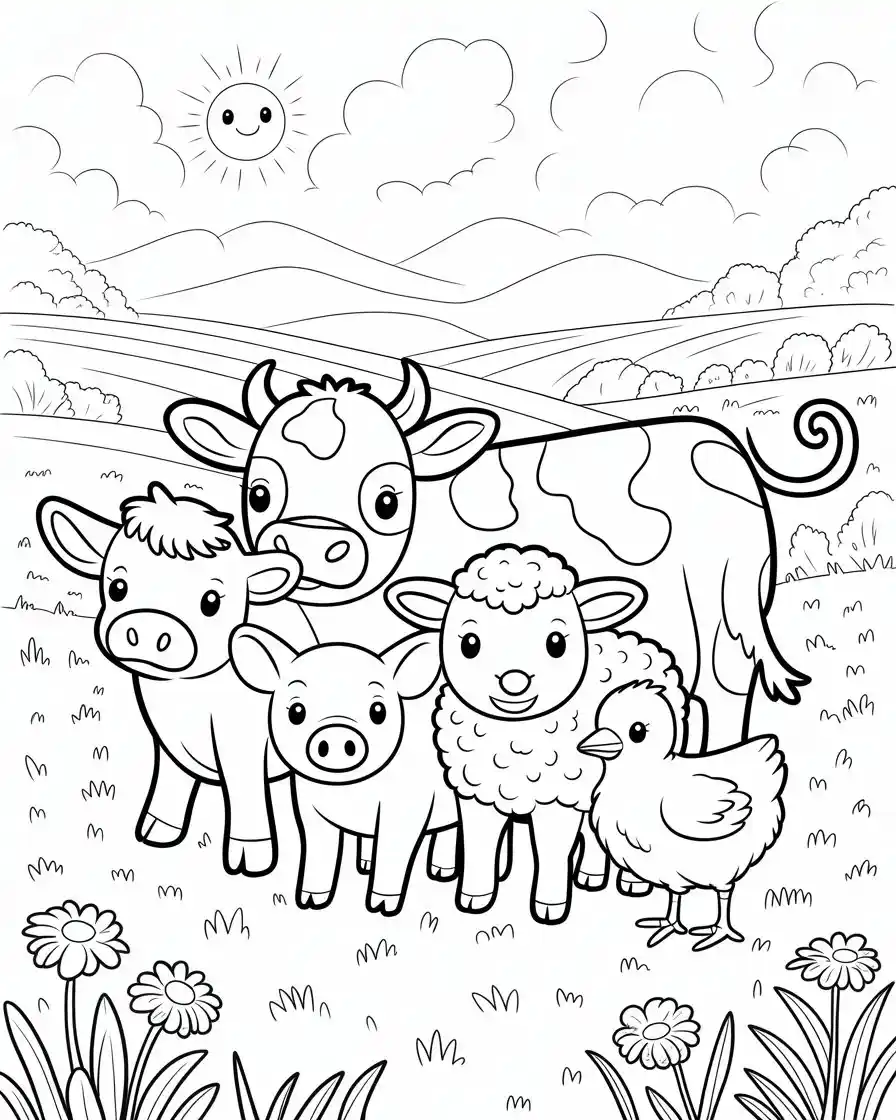
Farm & Pasture Scenes: A cow standing in a field, next to a barn, or grazing near a fence, useful for a broader farm-life or agriculture-themed activity.
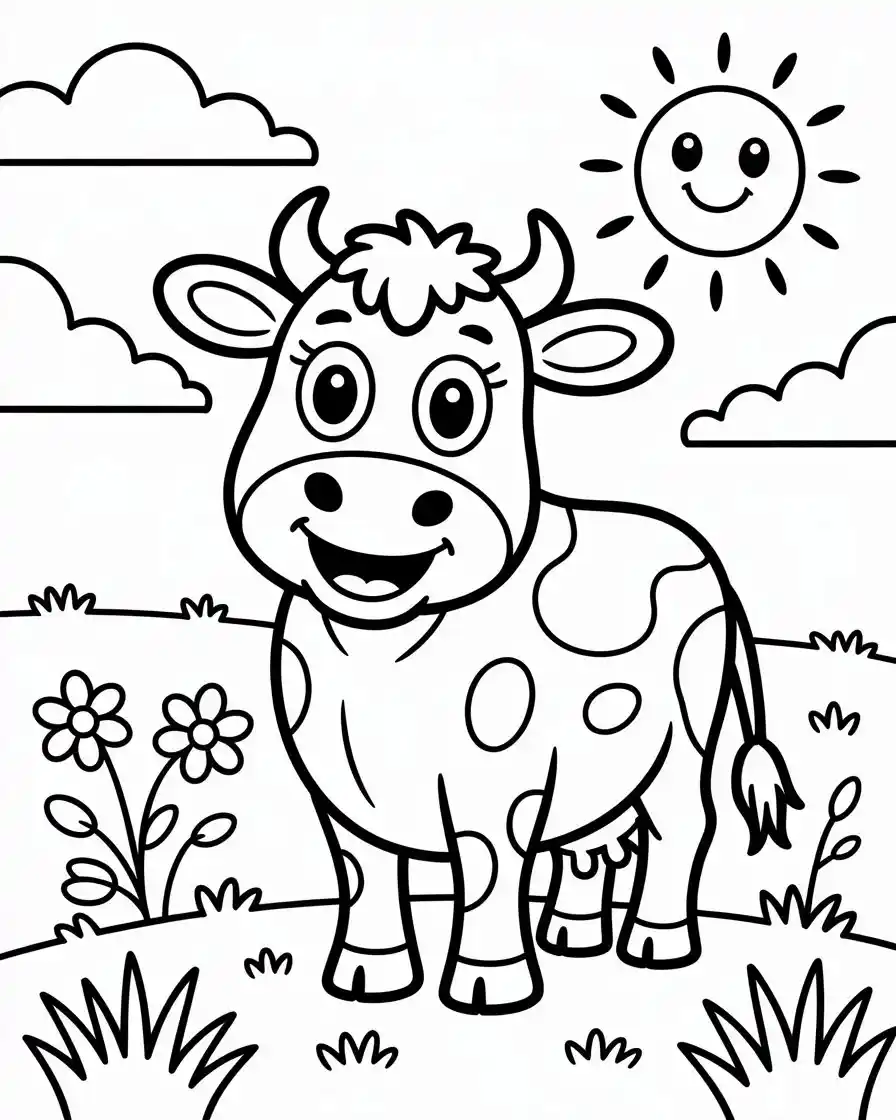
Cute & Simple Cow Designs: Rounded features and thick outlines built for toddlers and preschoolers who are still developing pencil control.
Highland Cow Designs: Long, shaggy fur and distinctive curved horns, one of the most requested styles in this entire collection thanks to its unmistakable look.
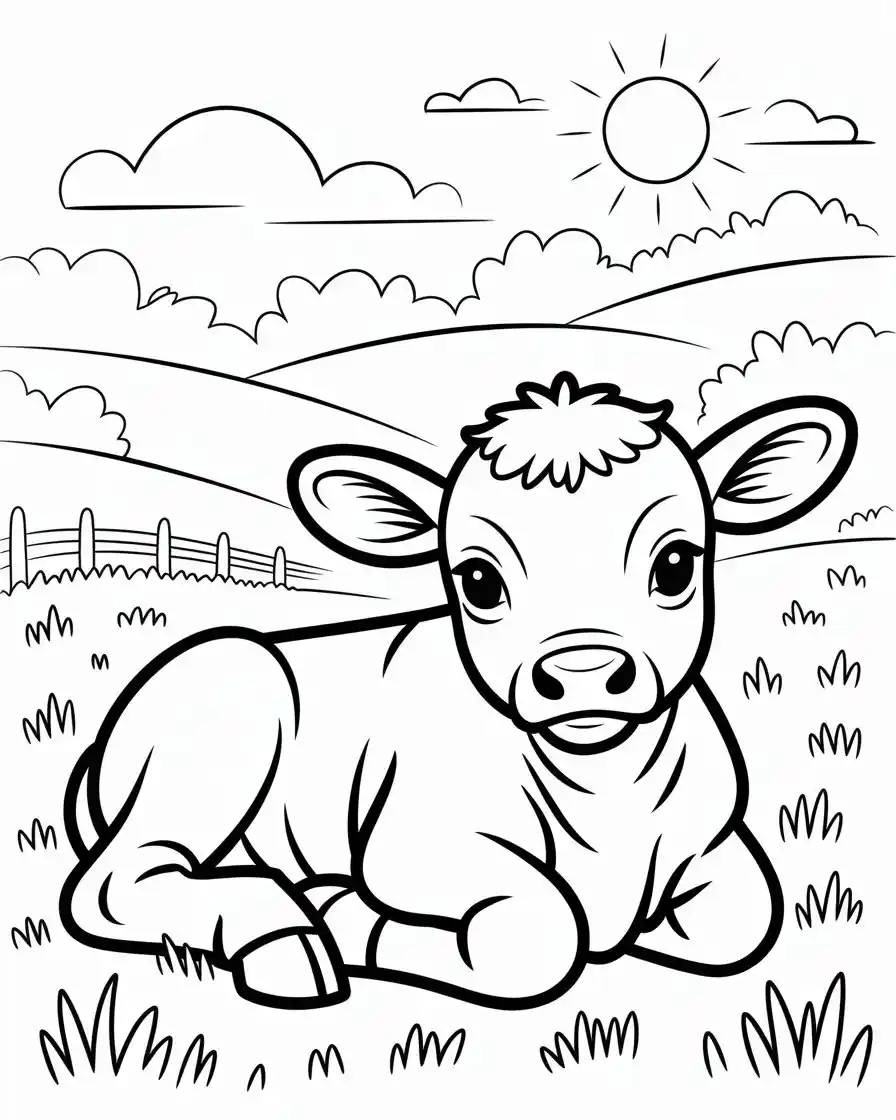
Baby Calf Pages: Smaller, softer proportions aimed at younger kids who prefer a gentler, baby-animal theme over a full-grown adult cow.
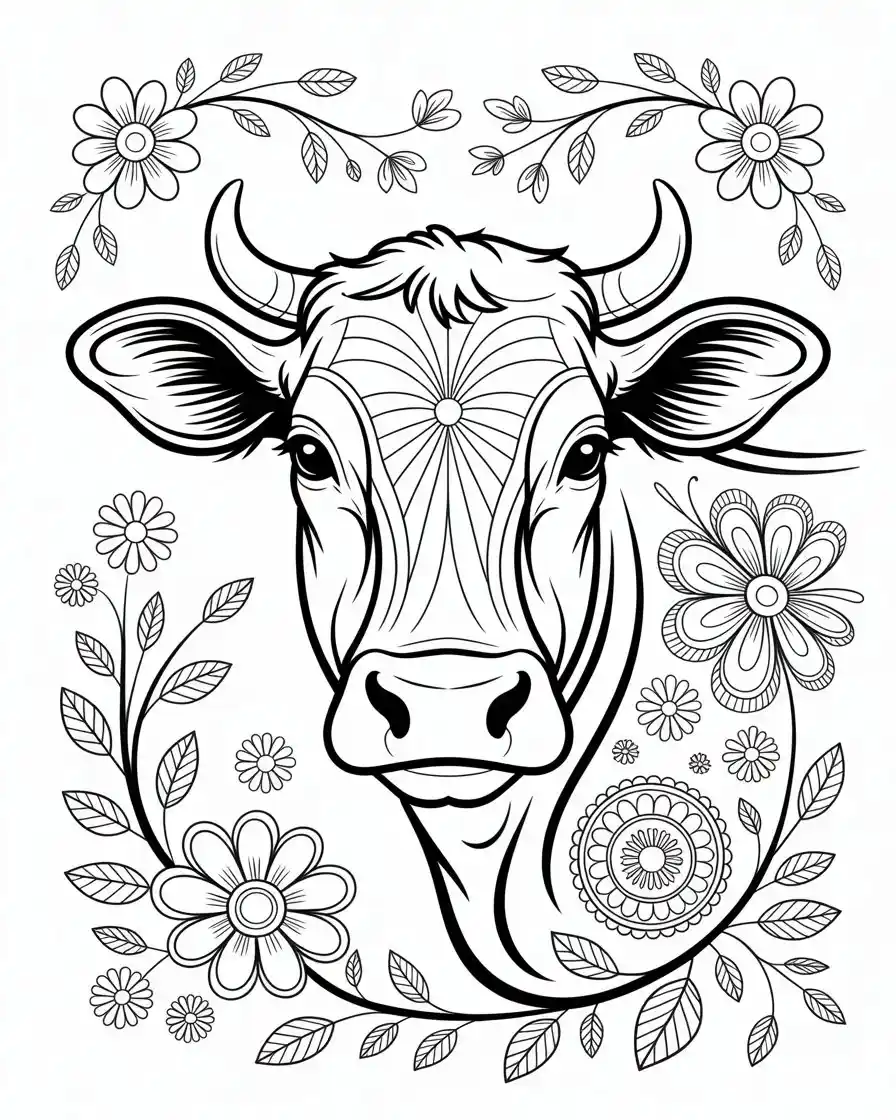
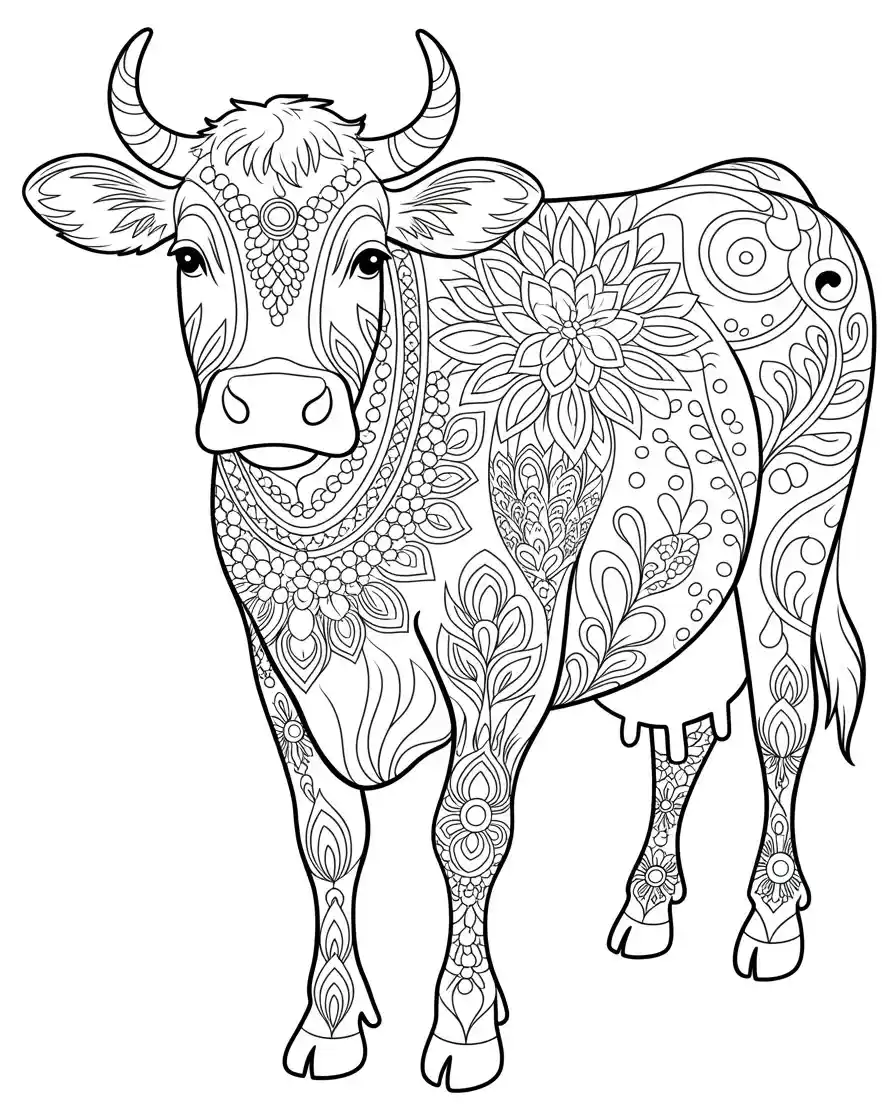
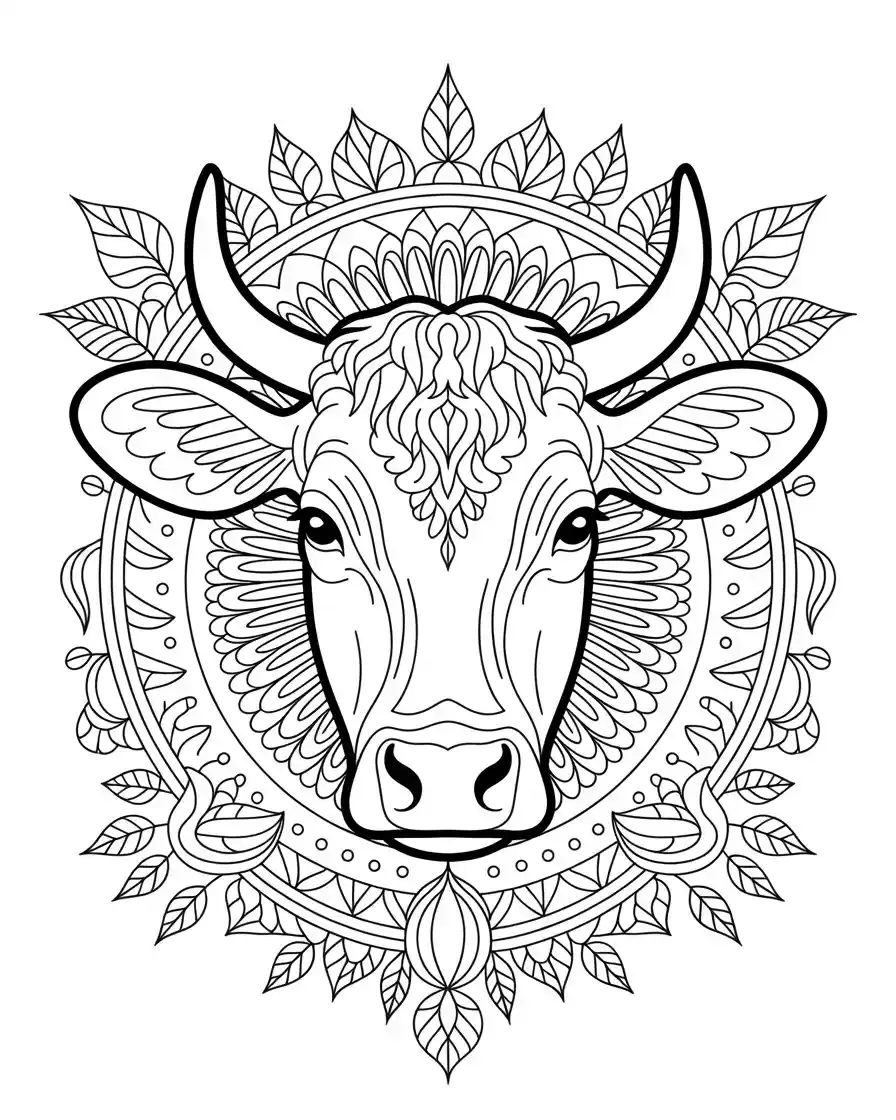
Realistic and Mandala Cow Pages: Detailed hide texture or a cow silhouette worked into a symmetrical pattern, built for teens and adults who want a longer, more advanced session.
A Closer Look at the Highland Cow
Since highland cow designs are consistently among the most searched styles in this collection, they’re worth a closer look on their own. These highland-style cow coloring pages trace back to a breed that originated in the Scottish Highlands, where its long, double-layered coat evolved specifically to handle harsh, wet winters, an insulating outer layer of long hair over a soft undercoat. That shaggy texture is exactly what makes the breed so satisfying to color, since it invites layered shading rather than a single flat color. Warm tans, soft browns, and reddish shades tend to look the most natural, though there’s no reason a child can’t experiment with unusual colors if that’s more fun for them.
Getting the Spots and Patches Right
Patches are usually what make or break a finished cow page, so a little technique goes a long way. Rather than filling every patch with pure black, try a very dark brown instead, since it reads as black from a normal viewing distance while giving the page a softer, less flat look. This trick works especially well across most cow coloring pages in this set, since the patch style repeats often even between different breeds. For a highland-style coat, layering two or three shades of tan and brown adds real depth that a single flat color can’t achieve. Markers work well for younger kids who want a fast, bold result, while colored pencils give more control for blending shaggy fur texture or shading around the patches.
Which Cow Design Suits Which Age
Grouping cow coloring pages by age and style makes it much easier to land on the right sheet without scrolling through the entire collection.
| Age Group | Best Fit | Why |
| 2–4 years | Cute & Simple Cow Designs | Large, rounded shapes suit early crayon grip |
| 5–8 years | Baby Calf Pages | Familiar, friendly subject holds attention |
| 9–12 years | Highland Cow Designs | Fur texture rewards developing patience |
| Teens & Adults | Realistic and Mandala Pages | Detailed patterns support a longer, calmer session |
Cow vs. Bison: A Comparison Kids Often Ask About
These two large, grazing animals get mixed up fairly often, so it’s worth explaining the difference while coloring. The clearest visual clue is the shoulders and head: a bison has a large, humped shoulder and a heavy, shaggy head, while a cow has a more level back and a smoother, less bulky frame. Horns are another giveaway, cattle horns tend to curve outward and up, while bison horns are shorter and curve more sharply inward. Cows are domesticated and raised on farms specifically for milk or meat, while bison are largely wild animals native to North American grasslands. Pointing out the shoulder hump alone is usually enough for a child to tell the two apart going forward.
Farmyard Facts Worth Sharing While Coloring
A few more details make good conversation starters during a coloring session. Calves can typically stand and walk within an hour of being born, which surprises a lot of kids who assume baby animals take much longer to get moving. Cows also spend a large part of their day, often more than eight hours, lying down chewing cud, a process where previously swallowed food is brought back up and rechewed to help with digestion. Despite their size, cows are capable of running short distances at speeds that can briefly outpace an average adult human. Sharing a detail like this while a child works on a design turns a simple coloring session into a small farm-science lesson.
Why This Simple Activity Does More Than It Seems
Coloring offers real developmental value alongside being an easy, low-cost activity. For younger children, holding a crayon and staying within an outline builds the same fine motor control and grip strength used later for handwriting, which is part of why cow coloring pages and similar farm-animal activities are so common in preschool routines. Choosing colors for patches or a shaggy coat also supports early decision-making and color recognition. For older kids and adults, a detailed highland or mandala design offers a different kind of value; the slow, repetitive nature of shading in fine detail is widely used as a simple, accessible way to unwind.
Who Actually Downloads These Pages
Not everyone printing this collection wants the same thing. A parent looking for something free and simple for a rainy afternoon usually just wants a quick, easy design to grab and print, while a teacher preparing a farm-unit worksheet wants pages that photocopy cleanly in black and white. Parents of toddlers tend to head straight for the cute, simplified styles, since bold outlines are easier for small hands to manage, while adults after a slower, more detailed session usually get more out of the highland and mandala designs. Keeping cow coloring pages organized by style rather than as one long, unsorted list makes it easier to land on the right design the first time.
What Happens After the Coloring Is Done
A finished cow design doesn’t have to be the end of the activity. Younger kids often enjoy cutting out a favorite calf design to use as a bookmark or gift tag, while a detailed highland cow page works well framed for a kitchen or nursery wall. In a classroom setting, having each student color their own cow and grouping the results together makes an easy, low-effort bulletin board for a farm or agriculture unit, and it naturally opens a conversation about where milk and dairy products actually come from.
A Note on Paper and Printing
Print at 100% scale rather than “fit to page” to avoid thinning out fine detail in the fur and patches. Standard printer paper works fine for crayon or light pencil use, but cardstock holds up better if markers or watercolor pencils are involved, since thinner paper tends to let ink bleed through quickly. All cow coloring pages in this set are formatted for both US Letter and A4 paper without any stretching or cropping.
Frequently asked questions
Explore More Coloring Pages
If you enjoyed this collection, a few related pages worth checking out include [Rabbit Coloring Pages], [Horse Coloring Pages], [Elephant Coloring Pages], and [Panda Coloring Pages], all free, printable, and ready to download.
New cow coloring pages are added to this collection periodically, so it’s worth bookmarking if today’s selection doesn’t have quite the right breed or pose. Whether it’s a quick calf design for a five minute activity or a detailed highland cow for a slower afternoon, the goal stays the same: a reliable source of free, print ready farm designs that families and teachers can come back to whenever they need one.