Flamingo Coloring Pages: A Full Printable Collection for Kids and Adults
There’s something naturally striking about a flamingo, the color alone does most of the work before a crayon even touches the page. That bright pink stands out against nearly any background, and the long legs and curved neck give the bird a shape that’s instantly recognizable even to very young kids. Unlike animals that need a dramatic pose or a detailed setting to hold attention, a flamingo’s appeal is built into the outline itself, which makes it a satisfying subject at almost any skill level.
This free, printable collection brings together flamingo coloring pages for every age and style, from a simple rounded outline for toddlers to a detailed, feather-textured design for older kids and adults, each available as a high-resolution PDF with no sign-up required. Whether the goal is a quick five-minute activity or a slower, more detailed session, there’s a version here built for it.
Why the Flamingo Works So Well as a Coloring Subject
Part of the appeal is purely visual. Unlike animals that rely on subtle brown or gray tones, a flamingo hands a child permission to go bold, pink, coral, even a mix of unusual shades, without it ever looking wrong, since real flamingos vary in color depending on their diet and can range from pale pink to deep orange-red. That flexibility makes the coloring process more forgiving and more fun, especially for younger kids who tend to get frustrated trying to match a correct color.
A few genuine facts are worth sharing while your child works on a design:
- A flamingo’s pink color actually comes from its diet, specifically the algae and small crustaceans it eats, which contain pigments called carotenoids that build up in the bird’s feathers over time.
- Flamingos are filter feeders, holding their heads upside down in the water and using their curved beaks to strain out food, a feeding style that’s unusual among birds.
- They’re highly social animals and are almost always found in large groups called flocks, sometimes numbering in the thousands.
- The one-legged standing pose so often used in illustrations is a real behavior, and researchers believe it helps the bird conserve body heat by tucking one leg up close to its body.


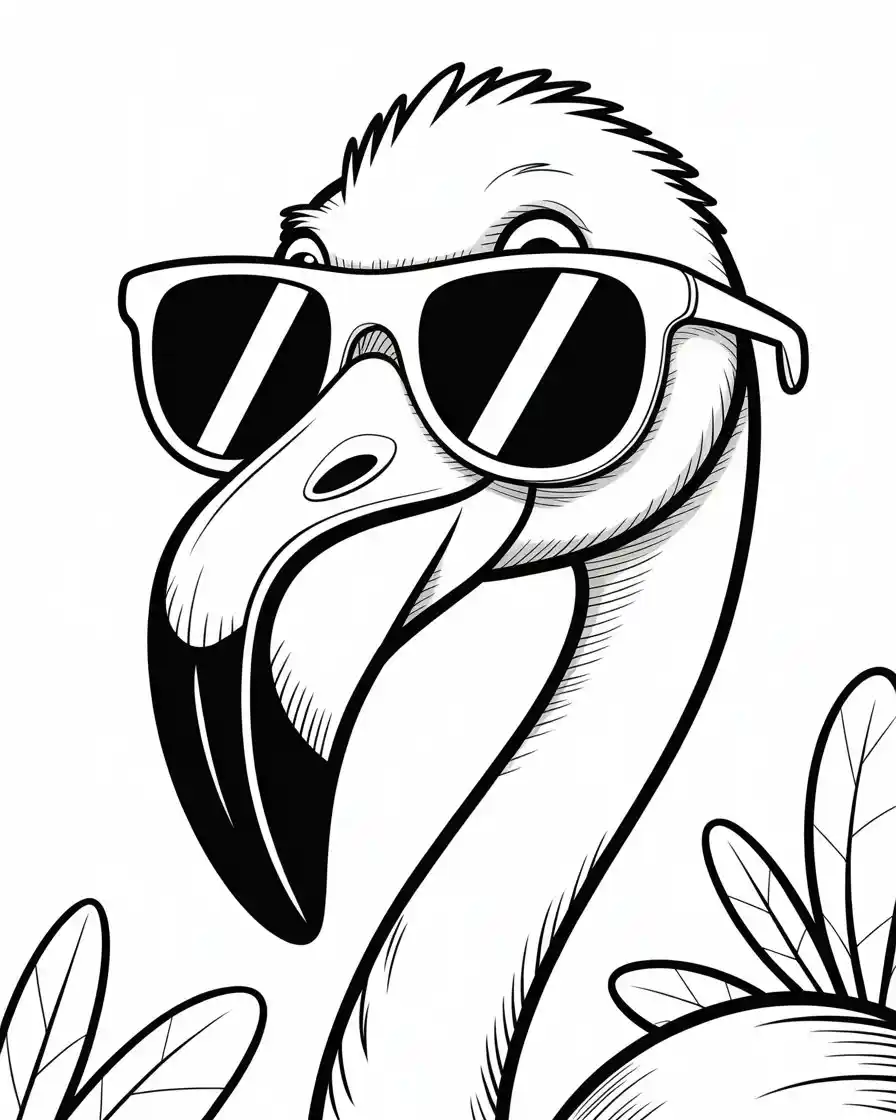
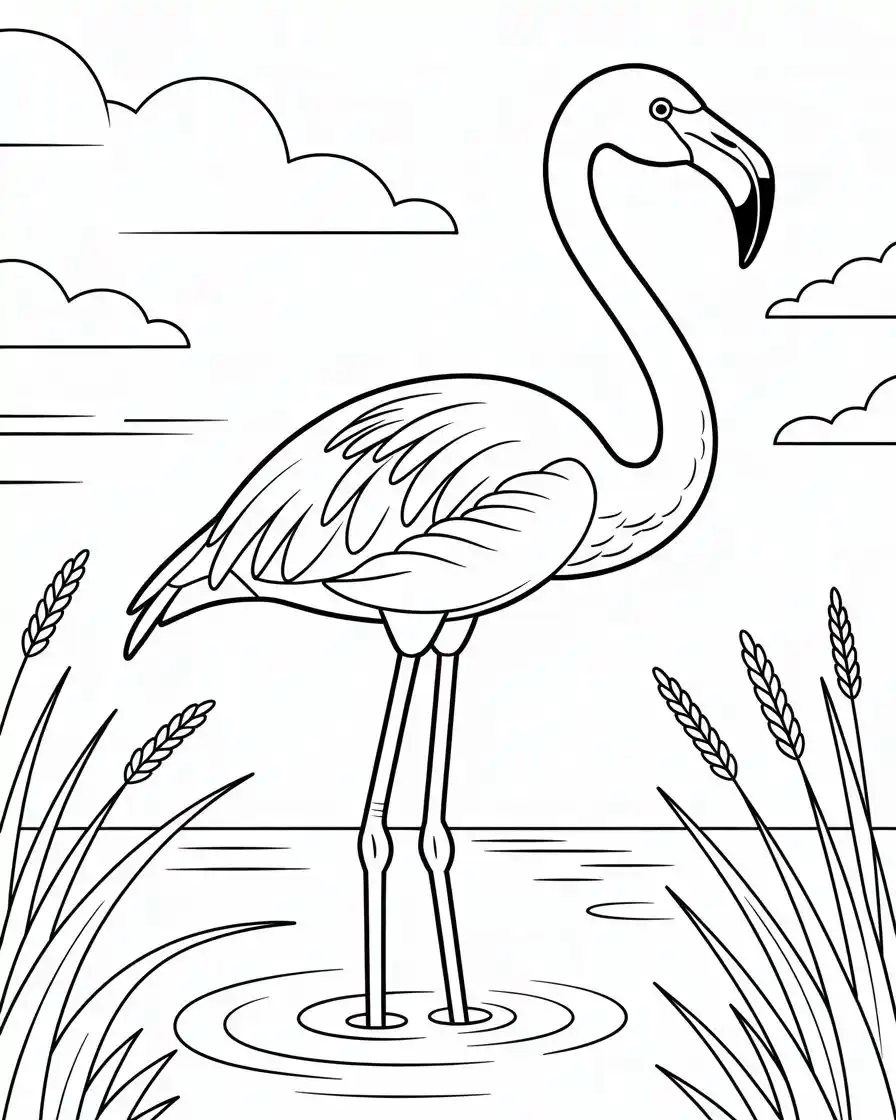
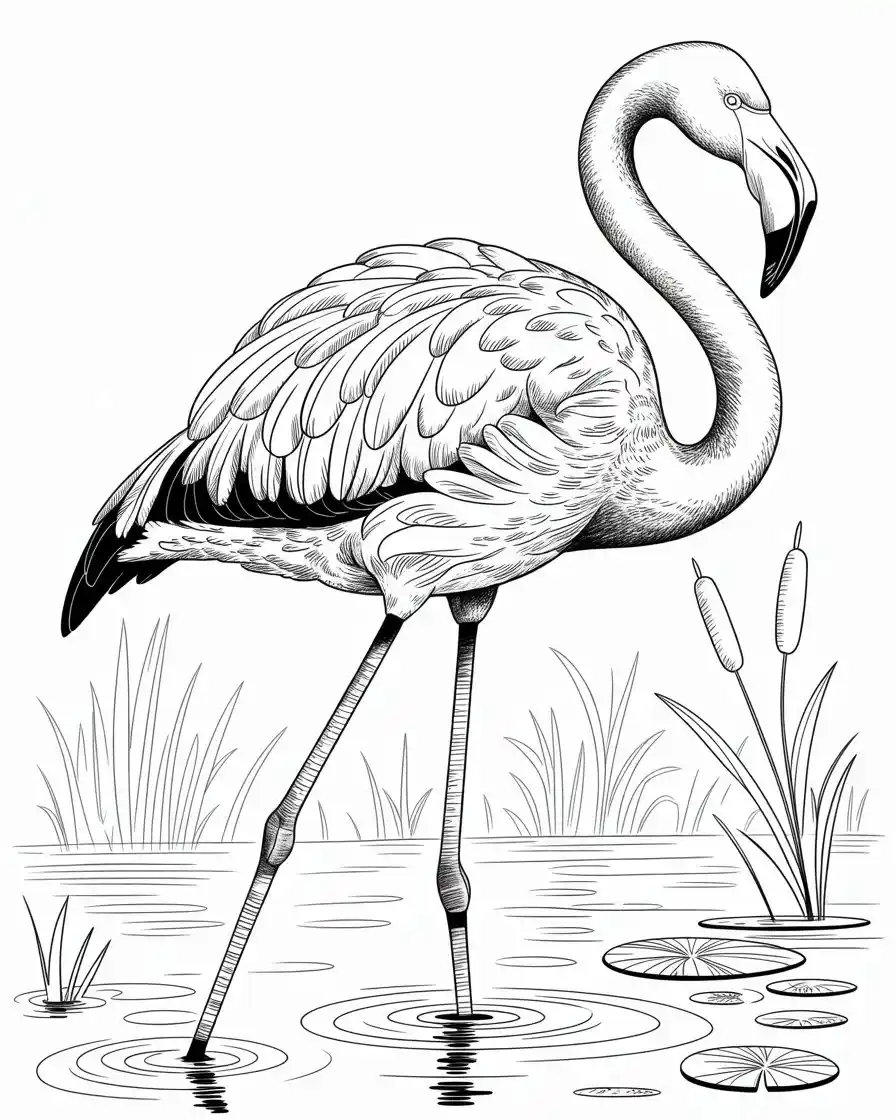
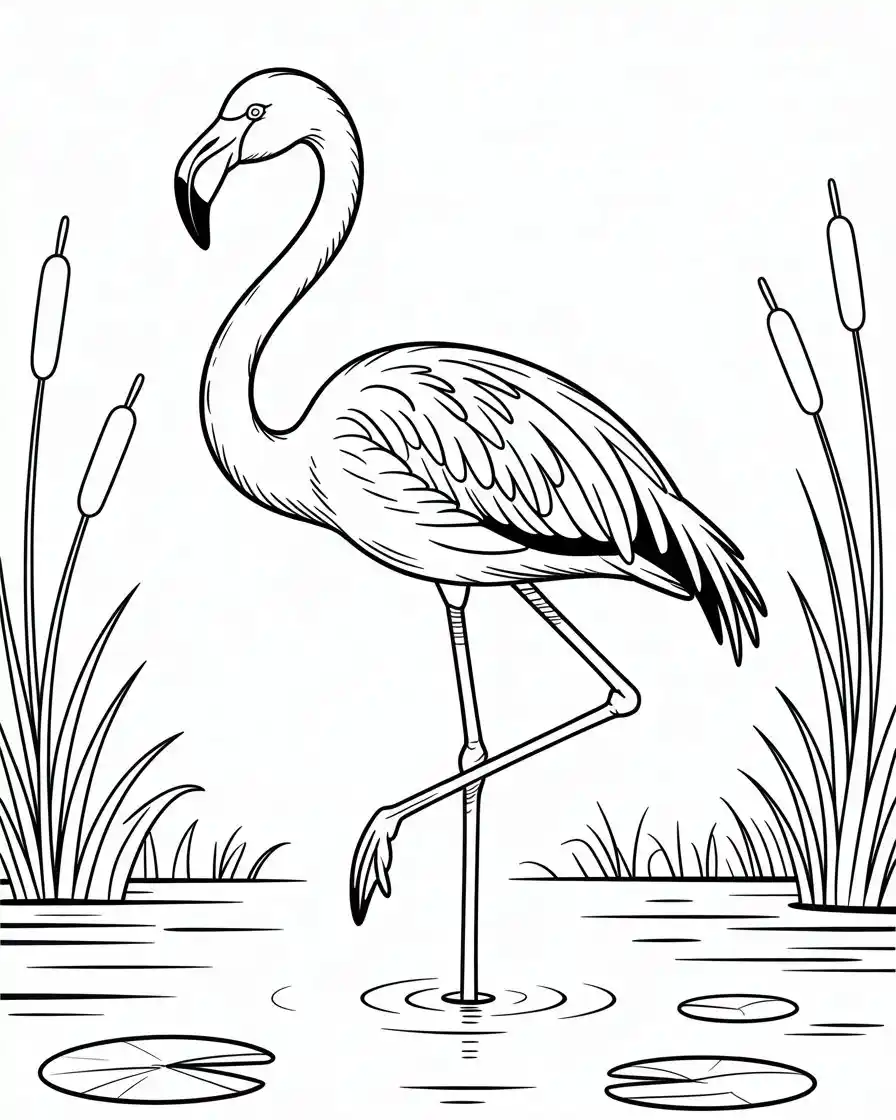
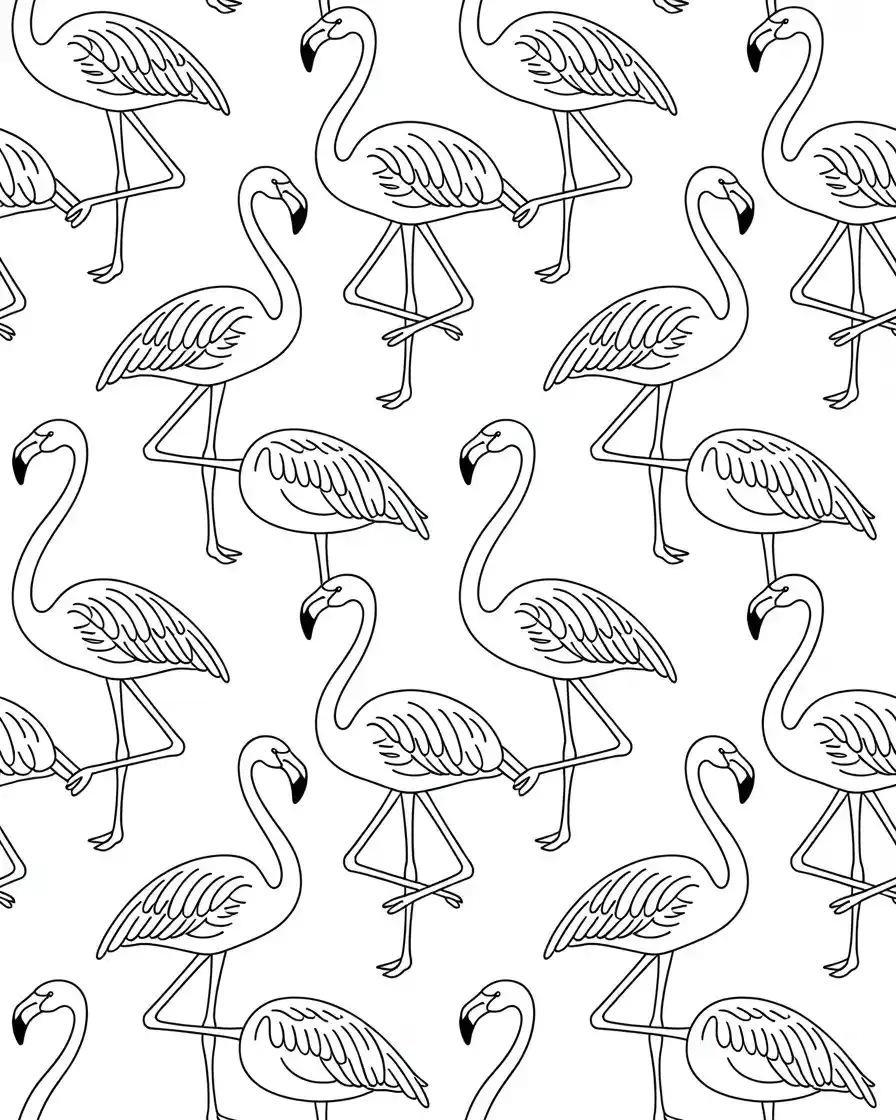
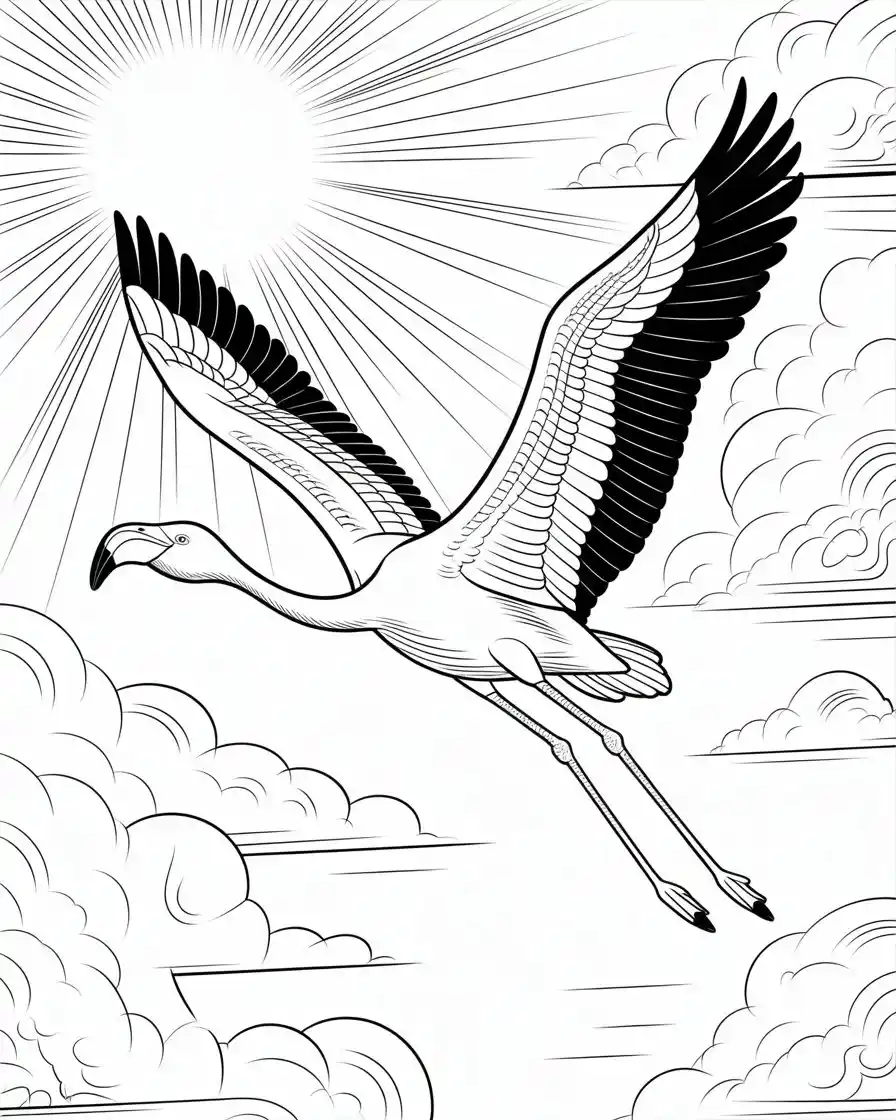
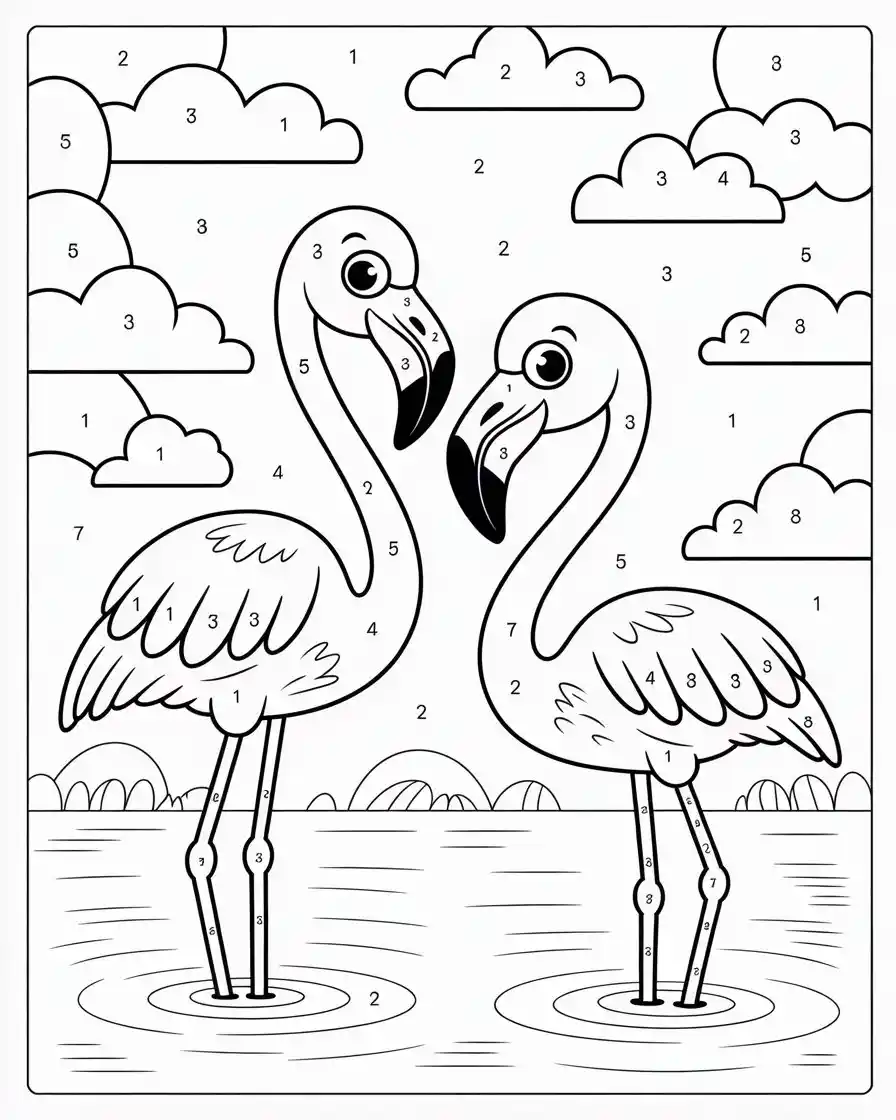
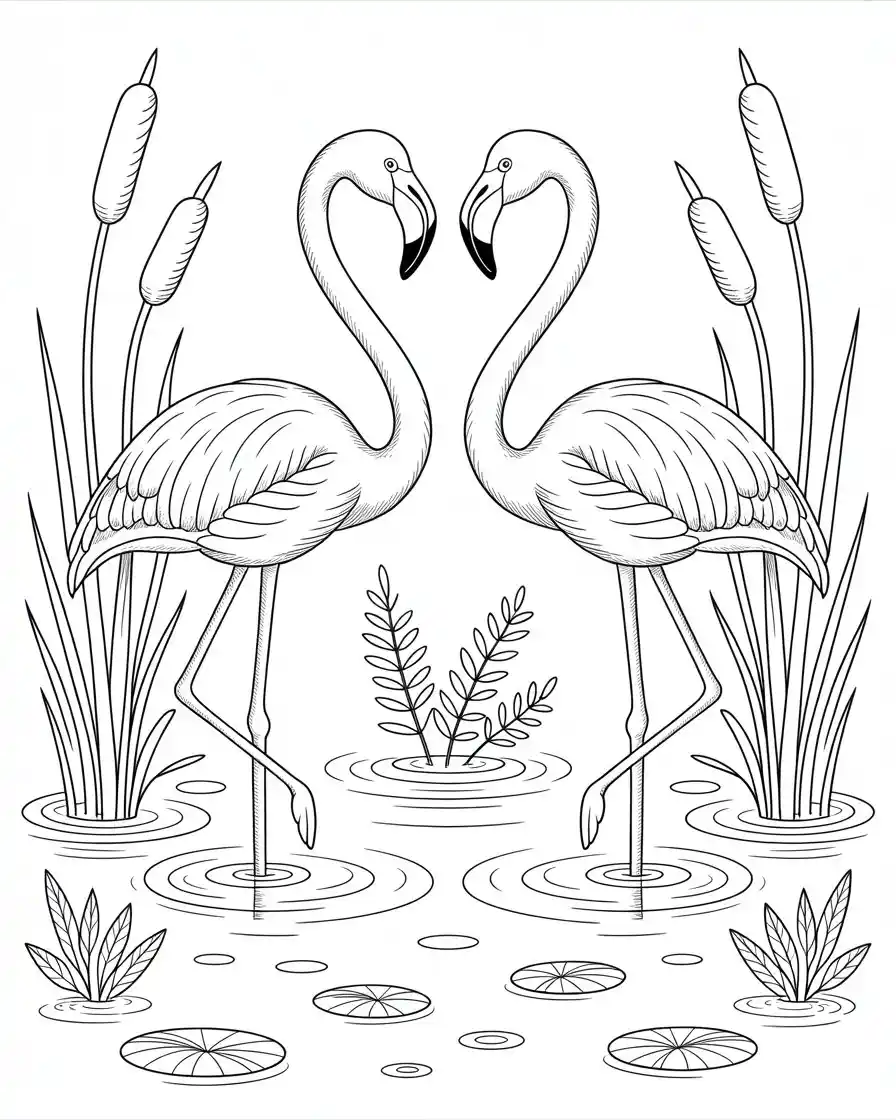
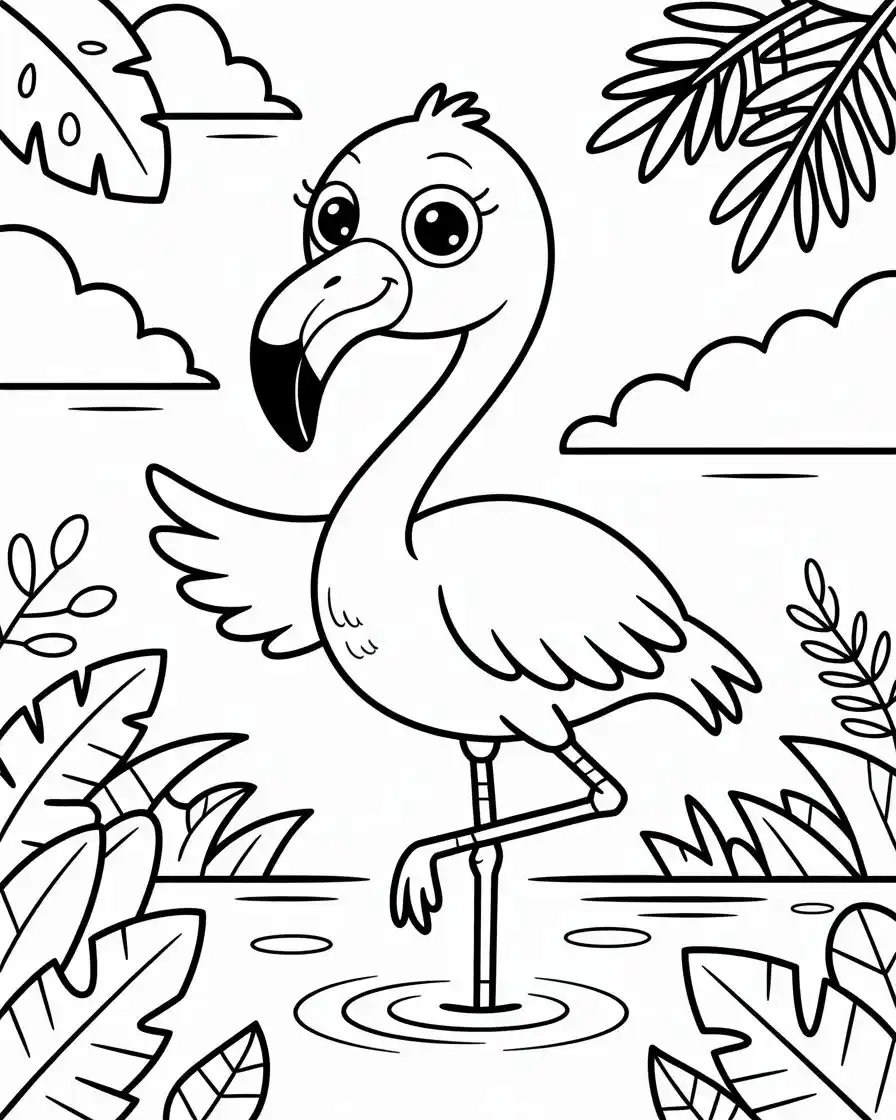
Styles Included in This Flamingo Coloring Pages Collection
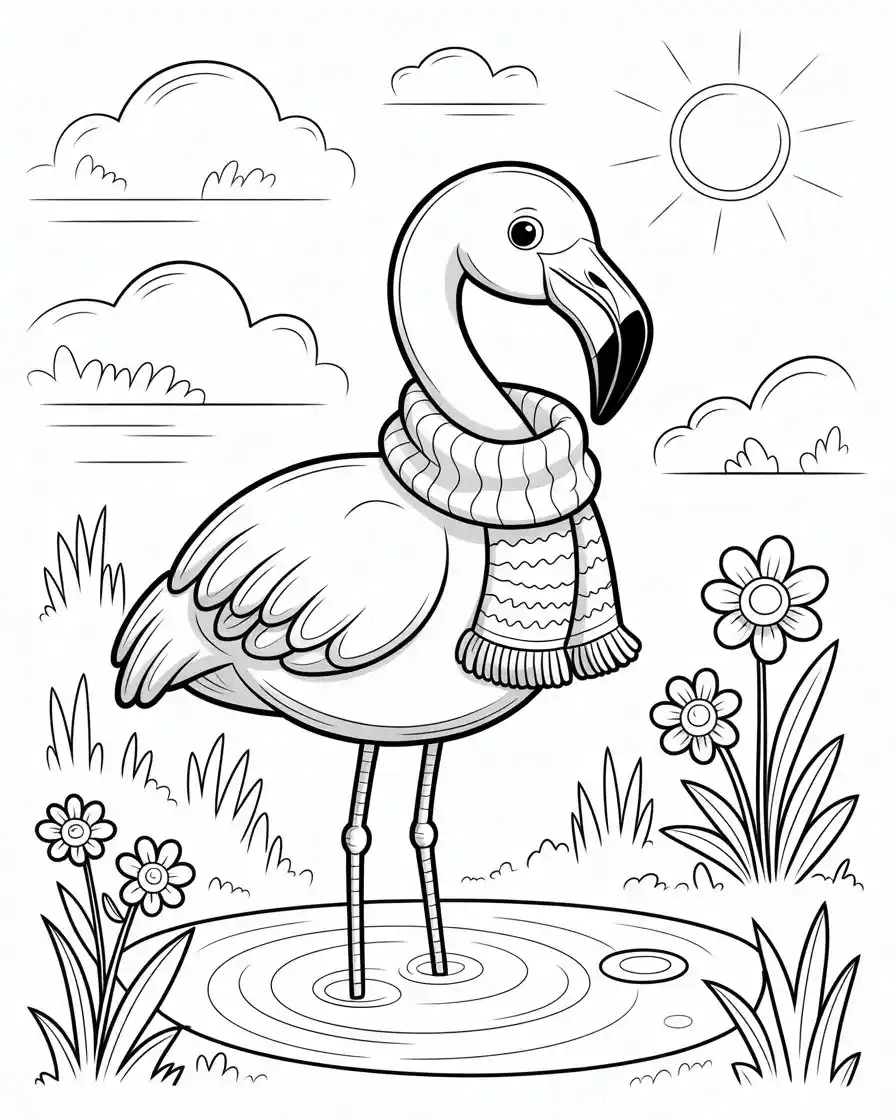
Cute Flamingo Designs, Rounded, simplified shapes with big friendly features, built for toddlers and preschoolers who are still developing pencil control.
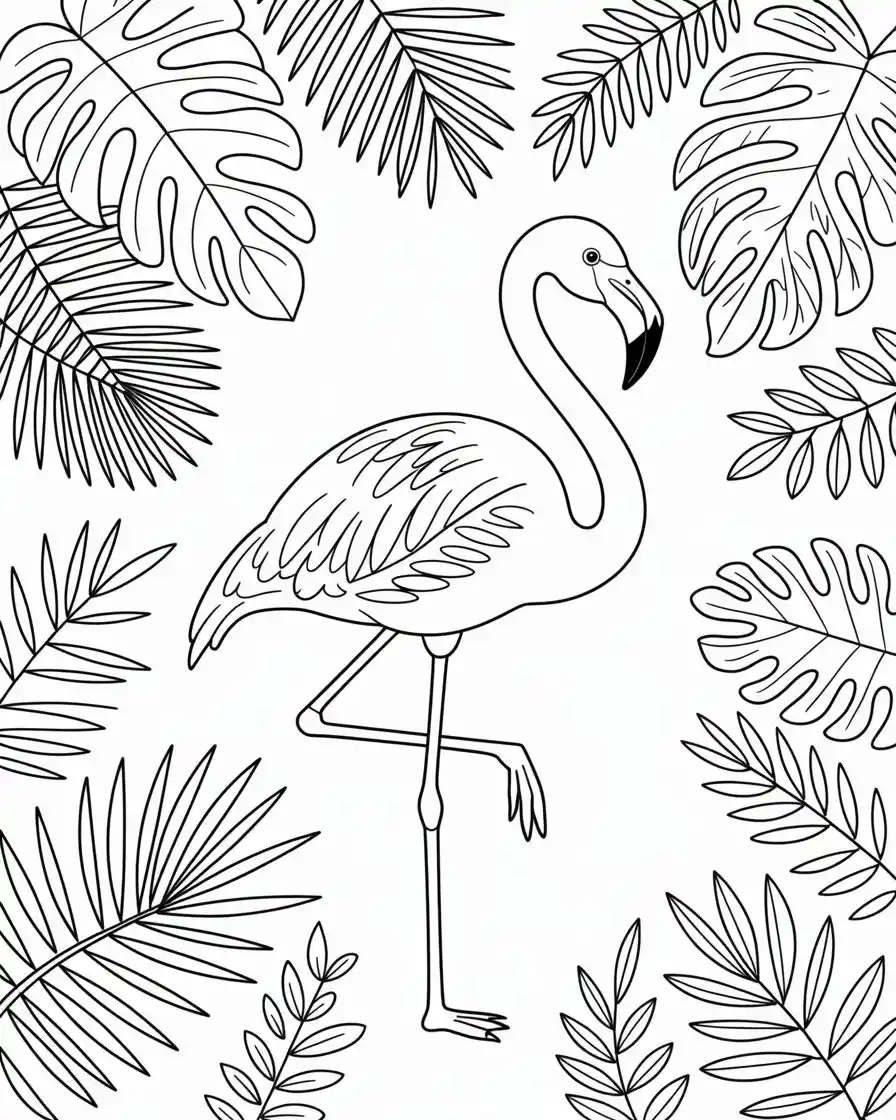
Realistic Flamingo Pages, Detailed feather texture, accurate leg and beak shape, and natural wetland backdrops for older kids and adults who want a longer, more advanced session.
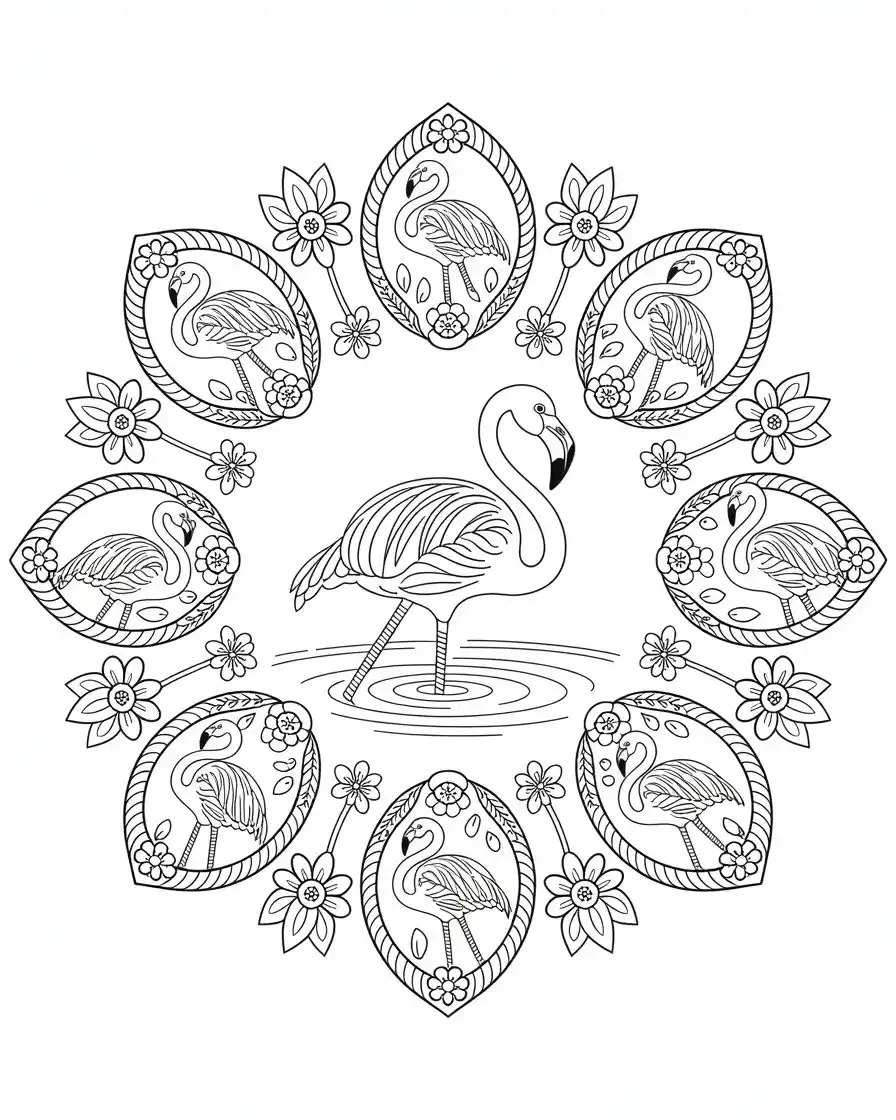
Flamingo Mandala Patterns, A flamingo silhouette worked into a symmetrical, geometric design, aimed at teens and adults looking for a calmer, more detailed coloring experience.
Flamingo in a Scene, Designs showing the bird standing in shallow water, alongside palm trees, or as part of a small flock, useful for a summer or tropical-themed activity.
Seasonal Flamingo Pages, Holiday-themed versions for Christmas and Valentine’s Day, which keep the subject fresh throughout the year without switching to an entirely different animal.
A Few Coloring Techniques Worth Trying
Since flamingos don’t require a strictly accurate color, this is a good subject for introducing a little color-blending practice. Try layering two or three pink shades, a lighter blush near the head and a deeper coral or magenta toward the wing tips, to add depth that a single flat pink can’t achieve. For the legs, a soft gray-pink works better than pure gray, since real flamingo legs often carry a faint pink tint. Markers give a fast, saturated result that works well for younger kids, while colored pencils allow smoother blending for the more detailed realistic and mandala designs.
A Few More Facts Worth Sharing While Coloring
Beyond color and diet, a handful of other details make good conversation starters during a coloring session. Baby flamingo coloring pages are actually born gray or white and don’t develop their signature pink color until they’re several months old and have eaten enough carotenoid-rich food, which is a fact many kids find surprising given how strongly the bird is associated with pink. Flamingos can live for several decades in the wild, with some individuals in zoos and sanctuaries reaching well past 40 years old, far longer than most people expect from a bird. Their knees also aren’t where they appear to be, the joint that looks like a backward-bending knee halfway up the leg is actually the bird’s ankle, while the true knee is hidden higher up, closer to the body, underneath the feathers. Sharing a detail like this while a child colors turns a simple activity into a small biology lesson without it feeling like a formal lesson.
Finding the Right Page for What You Need
Not everyone printing this collection is after the same thing. Someone looking for a free design for a rainy afternoon usually just wants something simple to grab and print, while a teacher preparing a classroom set wants pages that photocopy cleanly without losing the fine leg and feather lines. Parents of toddlers tend to head straight for the cute, rounded styles, since bold outlines are easier for small hands to manage, while adults searching for something more detailed usually get more out of the realistic and mandala sections, which reward a slower session. Keeping flamingo coloring pages organized by style rather than as one long, unsorted list makes it easier to land on the right design the first time.
Matching a Design to Age and Skill
| Age Group | Best Fit | Why |
| 2–4 years | Cute Flamingo Designs | Simple, rounded shapes suit early crayon grip |
| 5–8 years | Flamingo in a Scene | Familiar setting keeps attention without overwhelming detail |
| 9–12 years | Realistic Flamingo Pages | Feather detail rewards developing patience |
| Teens & Adults | Flamingo Mandala Patterns | Intricate pattern supports a longer, calmer session |
The Value Behind a Simple Activity
Coloring offers more than a quiet afternoon. For younger children, holding a crayon and staying within an outline builds the same fine motor control and grip strength used later for handwriting, which is part of why the activity is so common in preschool routines. Choosing bold, unusual colors also supports a kind of creative decision-making that a strictly “correct” subject doesn’t allow for. For teens and adults, a detailed mandala or realistic design offers a different kind of value, the slow, repetitive nature of filling in fine detail is widely used as a simple, low-cost way to unwind after a long day.
Flamingo vs. Stork: A Comparison Kids Often Ask About
These two long-legged wading birds get confused fairly often, so it’s worth clearing up while coloring. Color is the easiest giveaway, flamingos are pink to reddish-orange, while storks are typically white or gray with black wing markings. Beak shape is another clear difference: a flamingo has a distinctly curved, downward-bending beak built for filter feeding, while a stork’s beak is long, straight, and pointed, suited for spearing fish and small prey directly. Flamingos also tend to gather in large, tightly packed flocks, while storks are more commonly seen alone or in much smaller groups. Pointing out the beak shape alone usually gives kids an easy way to identify either bird correctly going forward.
Making the Most of a Finished Page
A colored flamingo design has plenty of life beyond the coloring session itself. Younger kids often enjoy cutting out a favorite design to use as a bookmark, while a detailed realistic page works well framed for a bedroom or nursery wall. In a classroom setting, having each student color their own flamingo and grouping the results into a flock display makes an easy, engaging bulletin board for a birds or wetlands unit, and it opens a natural conversation about diet, habitat, and why the bird is pink in the first place. A few families also use finished flamingo pages as simple party decorations for a summer or tropical-themed birthday.
Printing Notes
Print at 100% scale rather than “fit to page” to preserve the fine feather detail in the more advanced designs. Standard printer paper works fine for crayon or light pencil use, but cardstock holds up better if markers or watercolor pencils are involved, since thinner paper tends to let ink bleed through quickly. Both US Letter and A4 paper sizes are supported without any stretching or cropping.
Frequently asked questions About Flamingo coloring pages
Explore More Animal Coloring Pages
If you enjoyed this collection, a few related pages worth checking out include [Peacock Coloring Pages], [Hummingbird Coloring Pages], [Sea Turtle Coloring Pages], and [Dolphin Coloring Pages], all free, printable, and ready to download.
New flamingo coloring pages are added to this collection periodically, so it’s worth bookmarking if today’s selection doesn’t have quite the right style. Whether it’s a quick, simple outline for a five minute activity or a detailed mandala for a slower afternoon, the goal stays the same: a reliable source of free, print-ready designs that families and teachers can come back to whenever they need one. Between the bold color, the unmistakable shape, and the genuinely odd biology behind it, the flamingo turns out to be a far more interesting coloring subject than its simple pink silhouette first suggests.