Cheetah Coloring Pages: Realistic, Cute & Cub Designs (Free PDF)
Few animals capture a sense of speed and motion the way a cheetah does, and that makes it an unusually satisfying subject to color. Whether it’s a rounded, friendly cub design for a toddler or a detailed, mid-sprint scene for an older kid or adult, the spotted coat and sleek build give a coloring page personality that a lot of other animals don’t have. The spots alone make it a different kind of coloring task than most animals offer, less about one large area and more about a satisfying, repetitive pattern that keeps young hands busy far longer than a plain outline usually does.
This free, printable collection covers a full range of styles, from simple and friendly to detailed and realistic, each available as a high-resolution PDF that prints cleanly on US Letter or A4 paper, with no sign-up required. There’s a version suited to a quick five-minute activity and one built for a longer, more focused session, depending on what the moment calls for.

The Appeal of the Cheetah as a Coloring Subject
Part of what makes a cheetah fun to color comes straight from biology. The cheetah is the fastest land animal alive, capable of reaching speeds close to 70 miles per hour in short bursts, and that reputation for speed naturally shows up in how these designs are drawn, often mid-stride or mid-leap rather than sitting still. The spotted coat also gives kids a genuinely enjoyable coloring task, since filling in dozens of small spots is a different kind of activity than shading one large area, and it holds attention in a way a plain outline sometimes doesn’t.
A few real facts are worth sharing while your child works on a design:
- A cheetah’s spots are unique to each individual, similar to a human fingerprint, and no two cheetahs have exactly the same pattern.
- Distinctive black tear-mark lines run from the inner corners of a cheetah’s eyes down to its mouth, sometimes called “tear marks,” which are thought to help reduce glare from the sun while hunting.
- Unlike lions, cheetahs are not highly social and are usually solitary, aside from mothers raising cubs or small groups of brothers that sometimes stay together for life.
- Cheetahs rely on speed and eyesight rather than strength, and they typically hunt during the day, when many other big cats are resting.

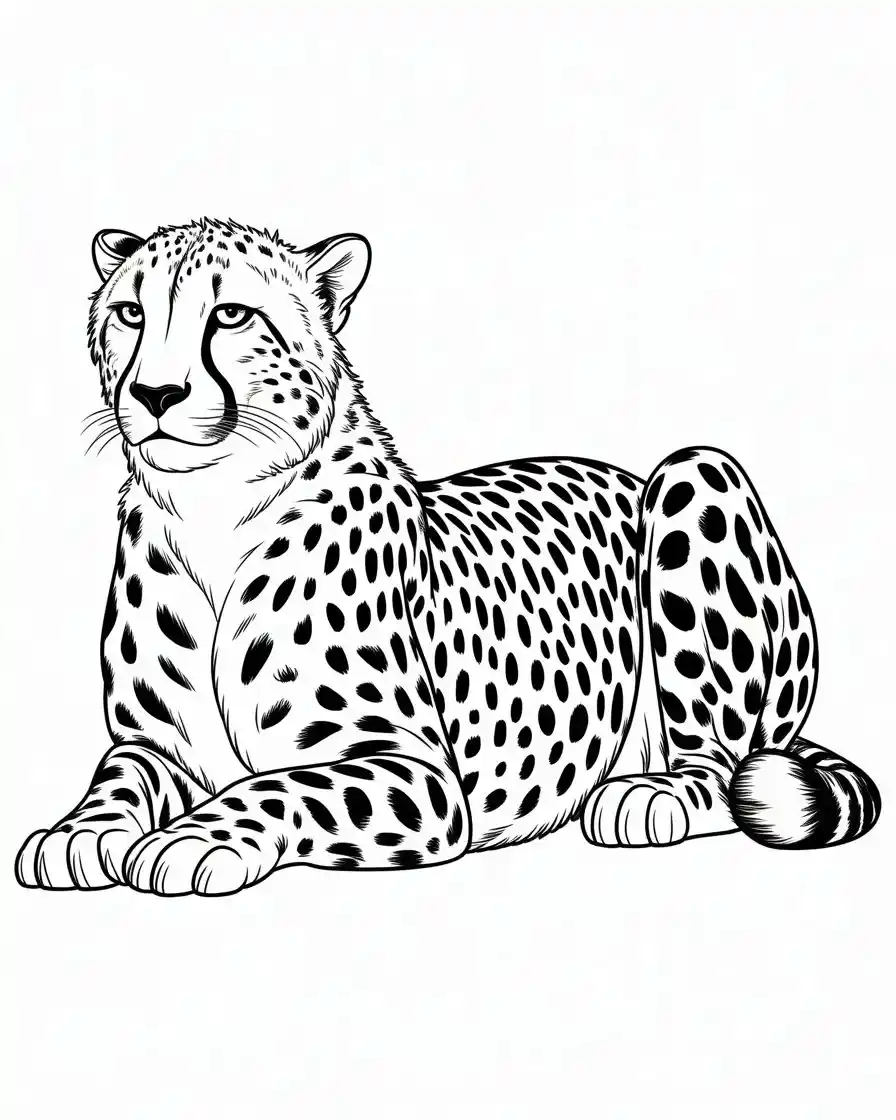
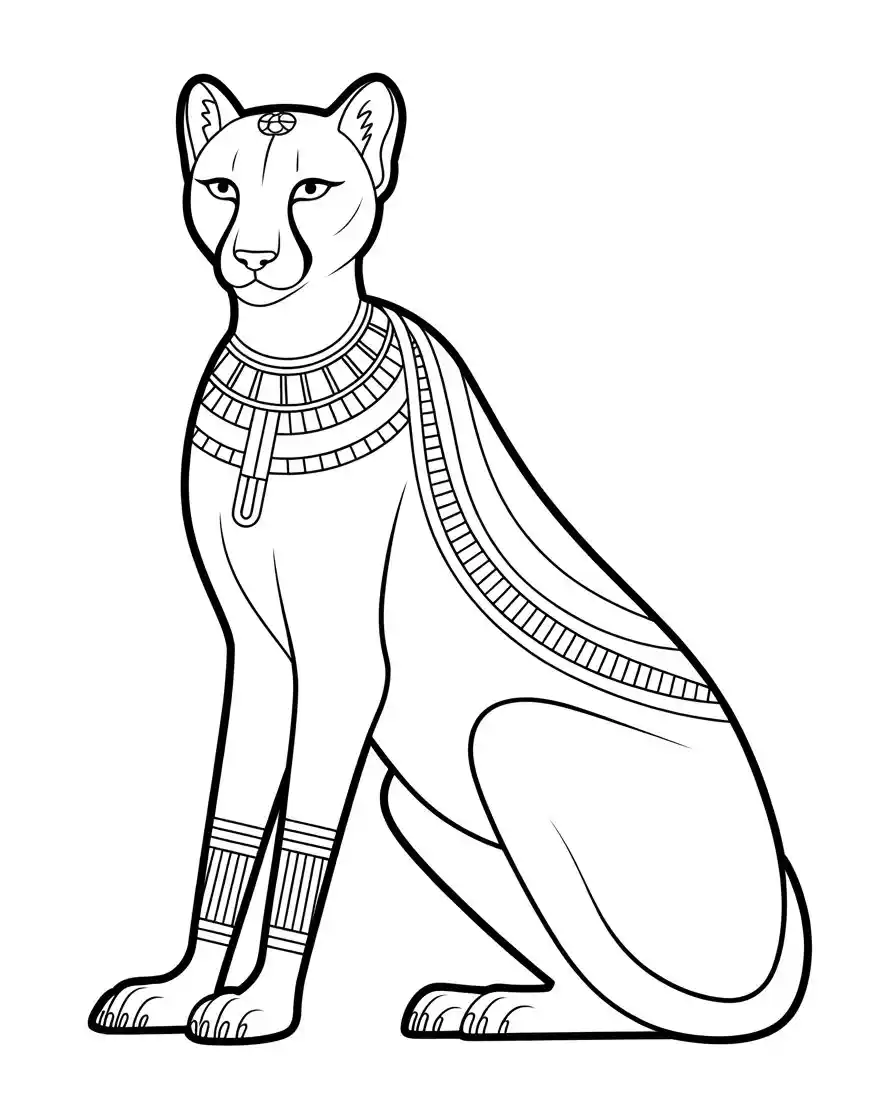
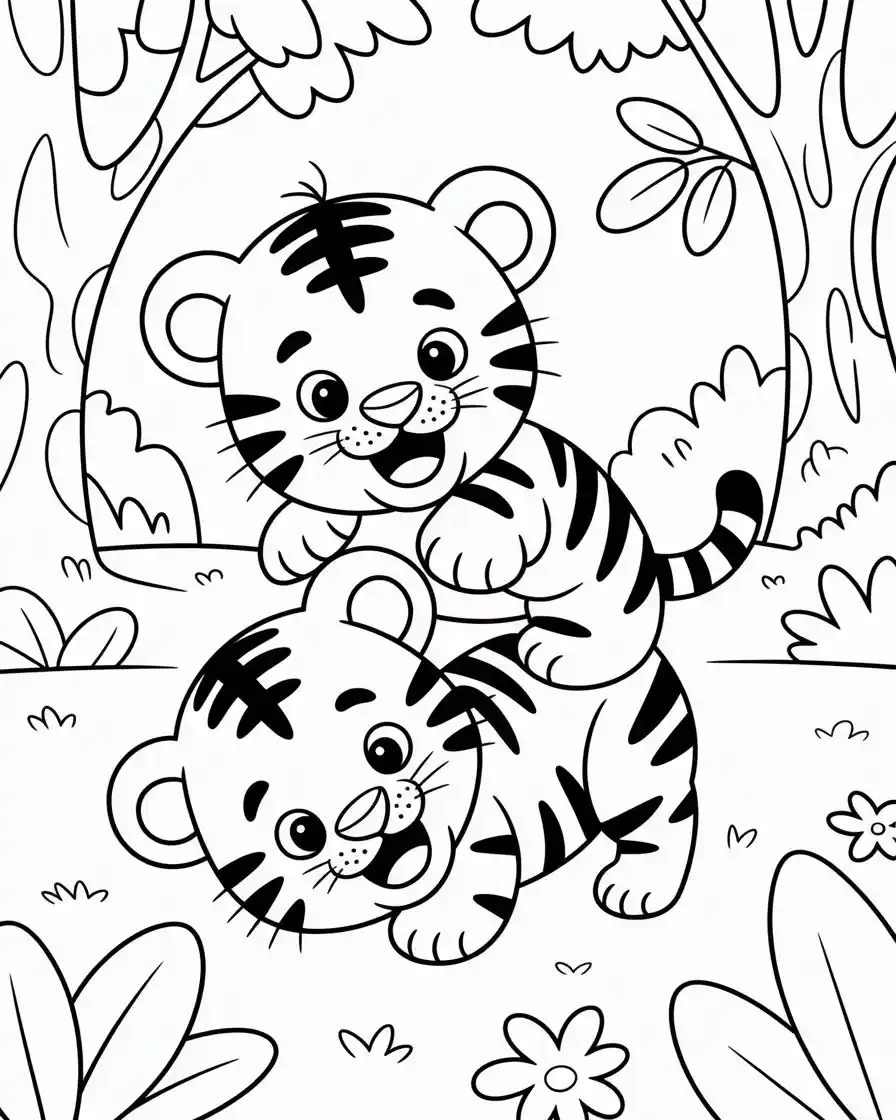
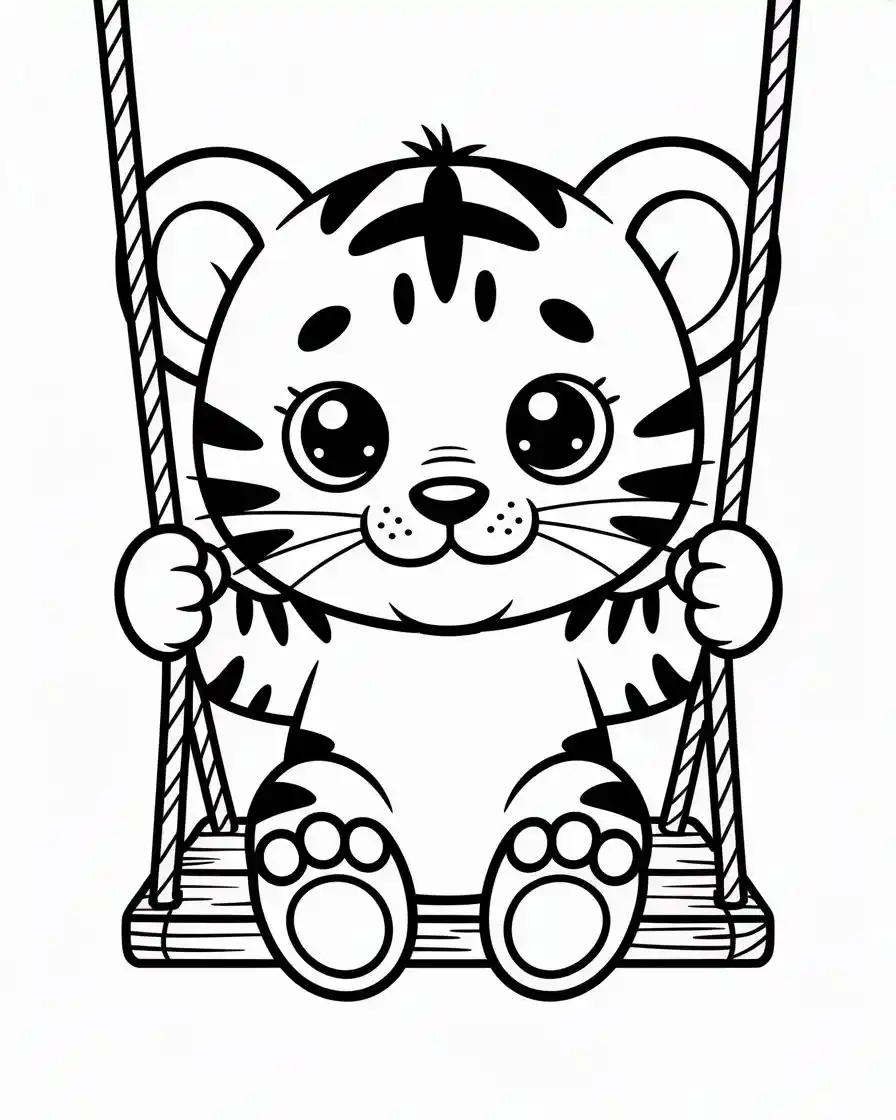


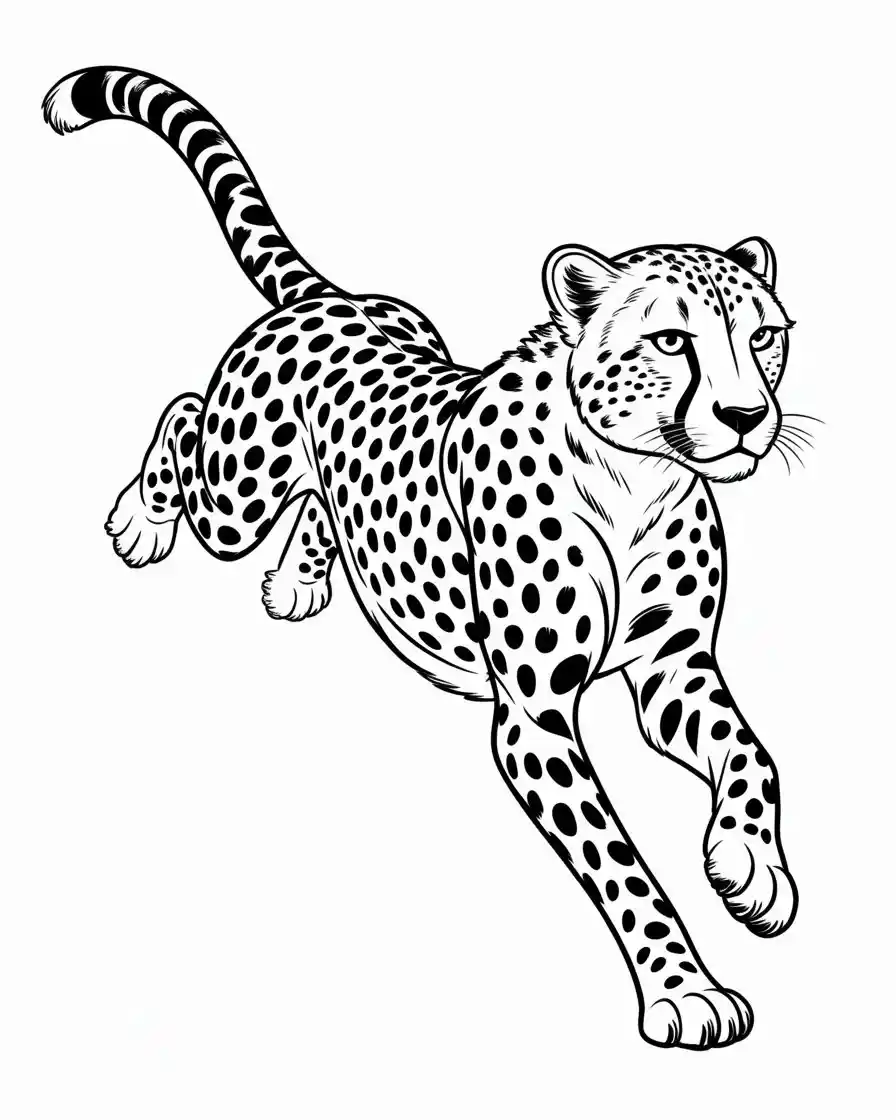
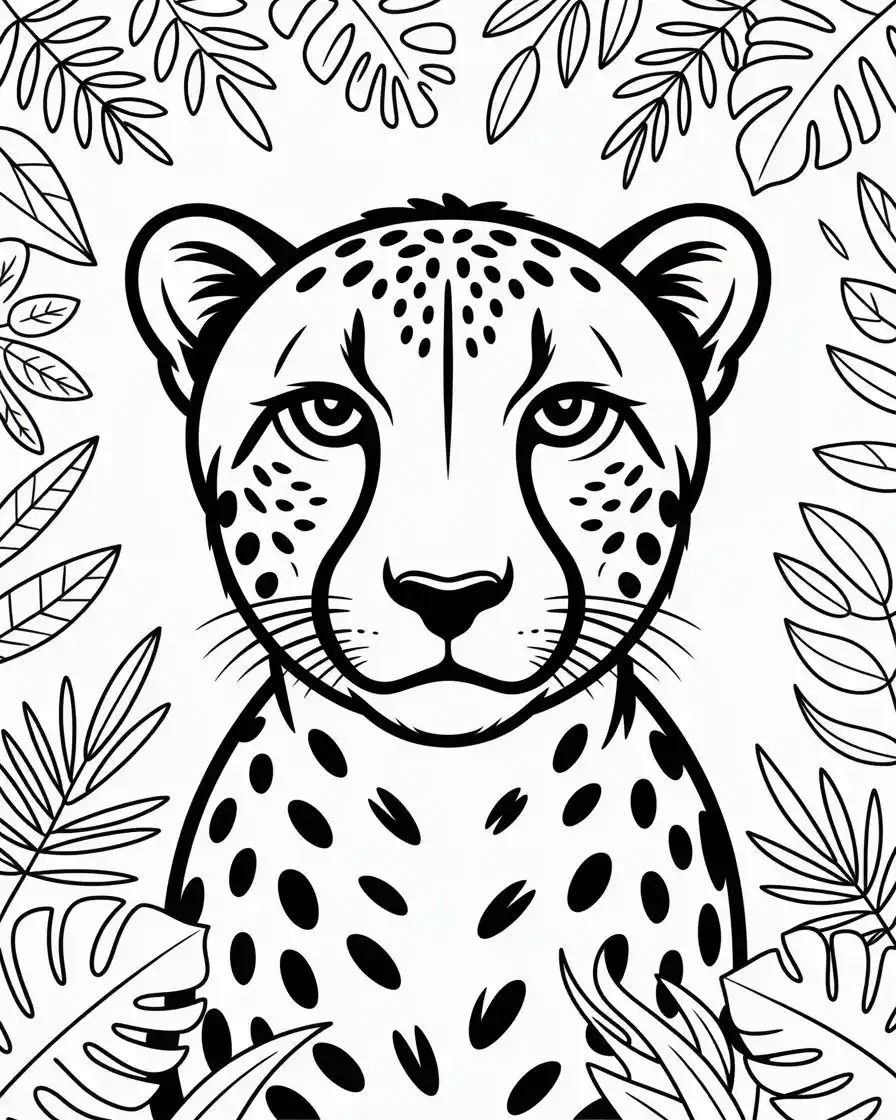

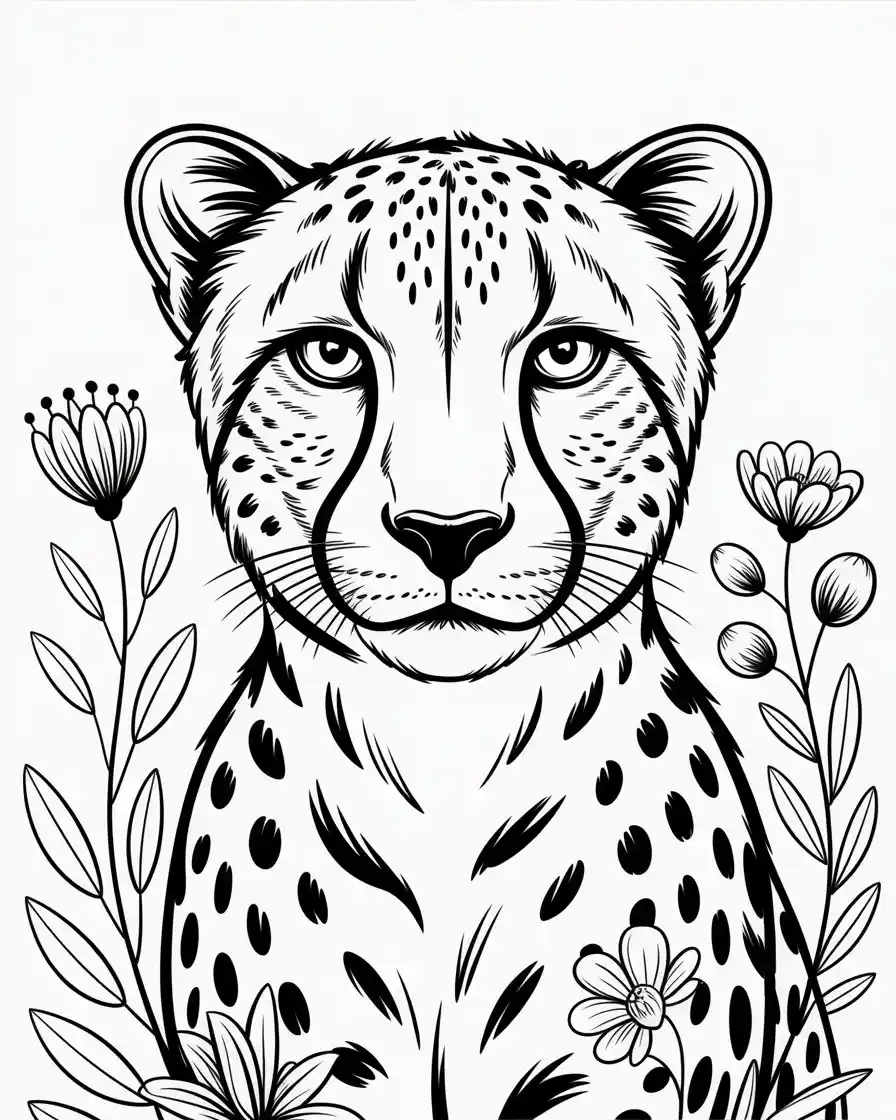
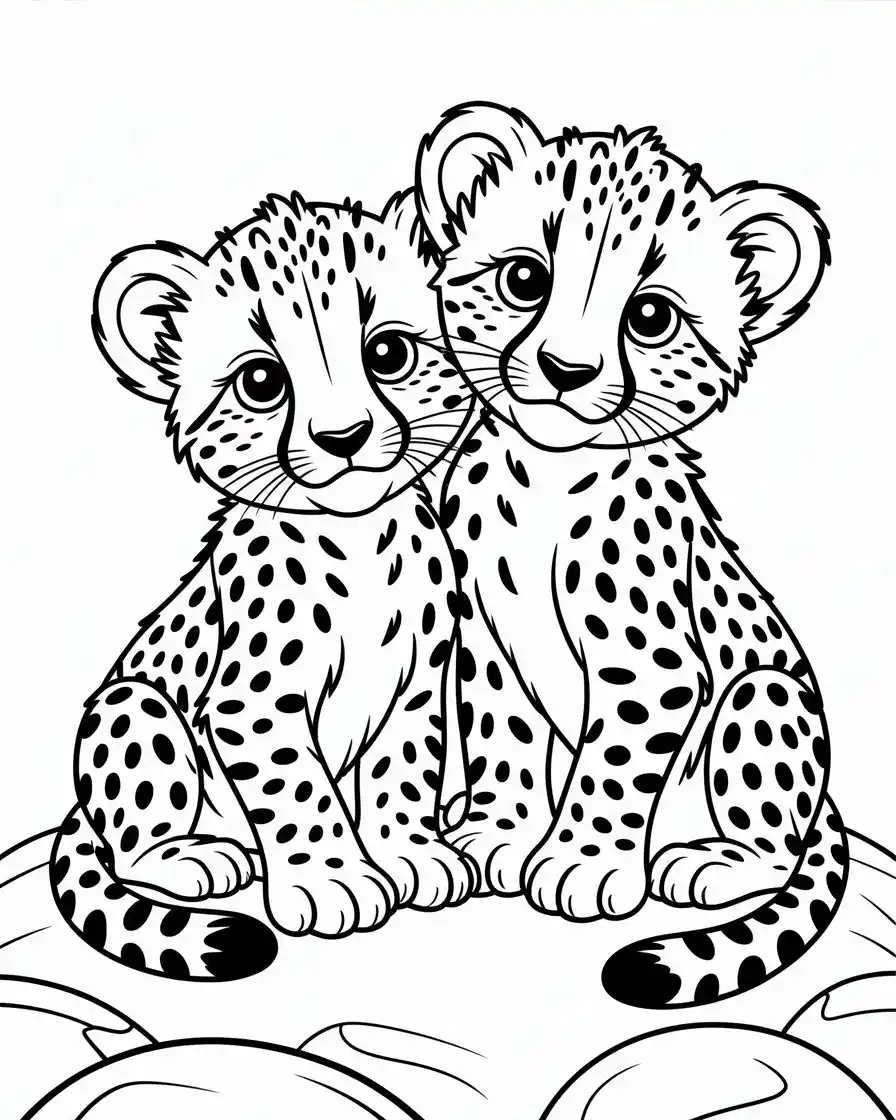
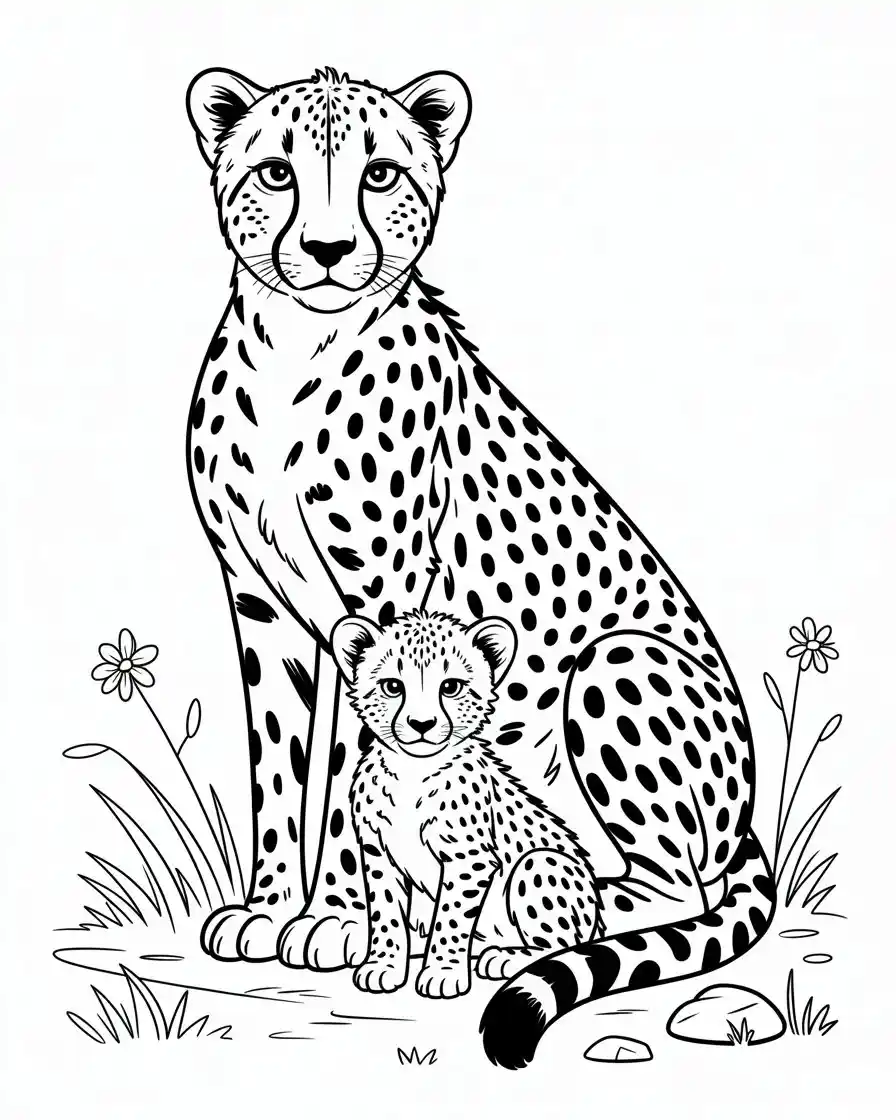
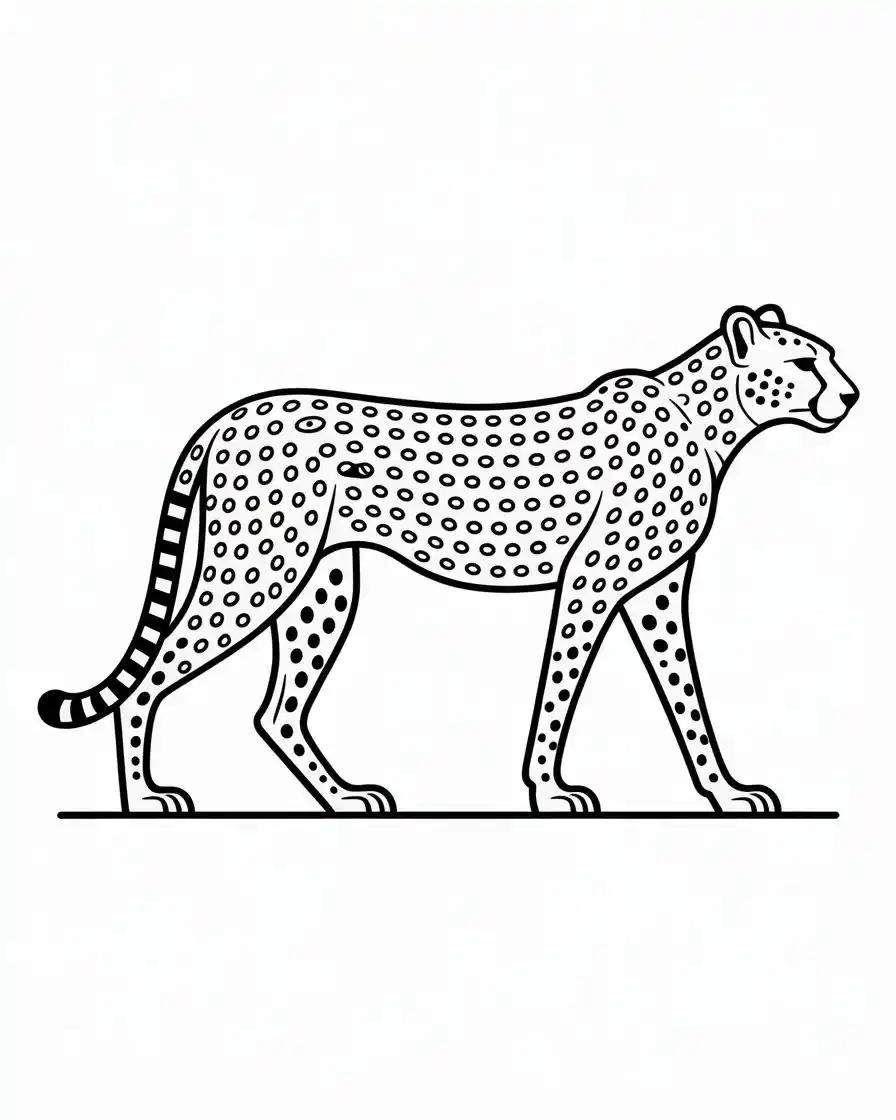
The Range of Cheetah Coloring Pages Available Here
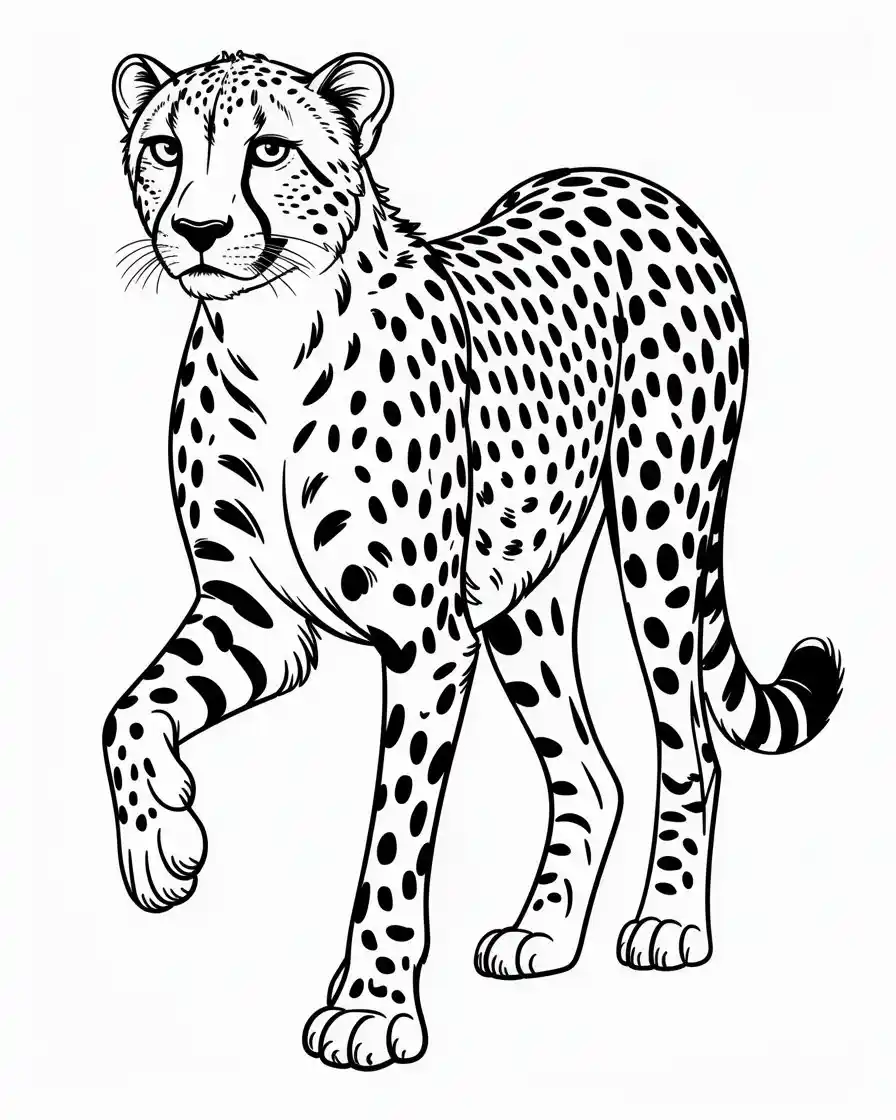
Realistic Cheetah Designs, Detailed spot patterns, muscle definition, and a savannah backdrop, aimed at older kids and adults who enjoy a longer, more advanced coloring session.
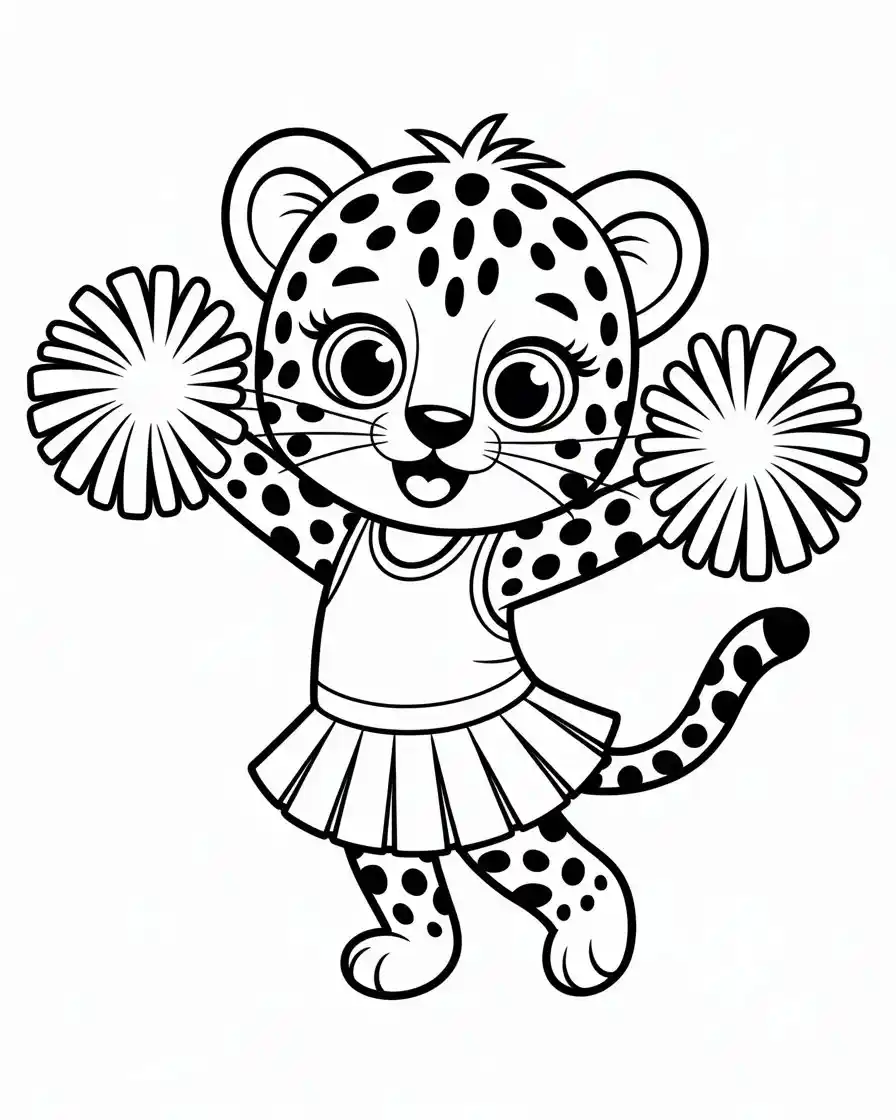
Cute Cheetah Pages, Rounded features and simplified spots for younger children, keeping the design friendly without losing the animal’s recognizable pattern.
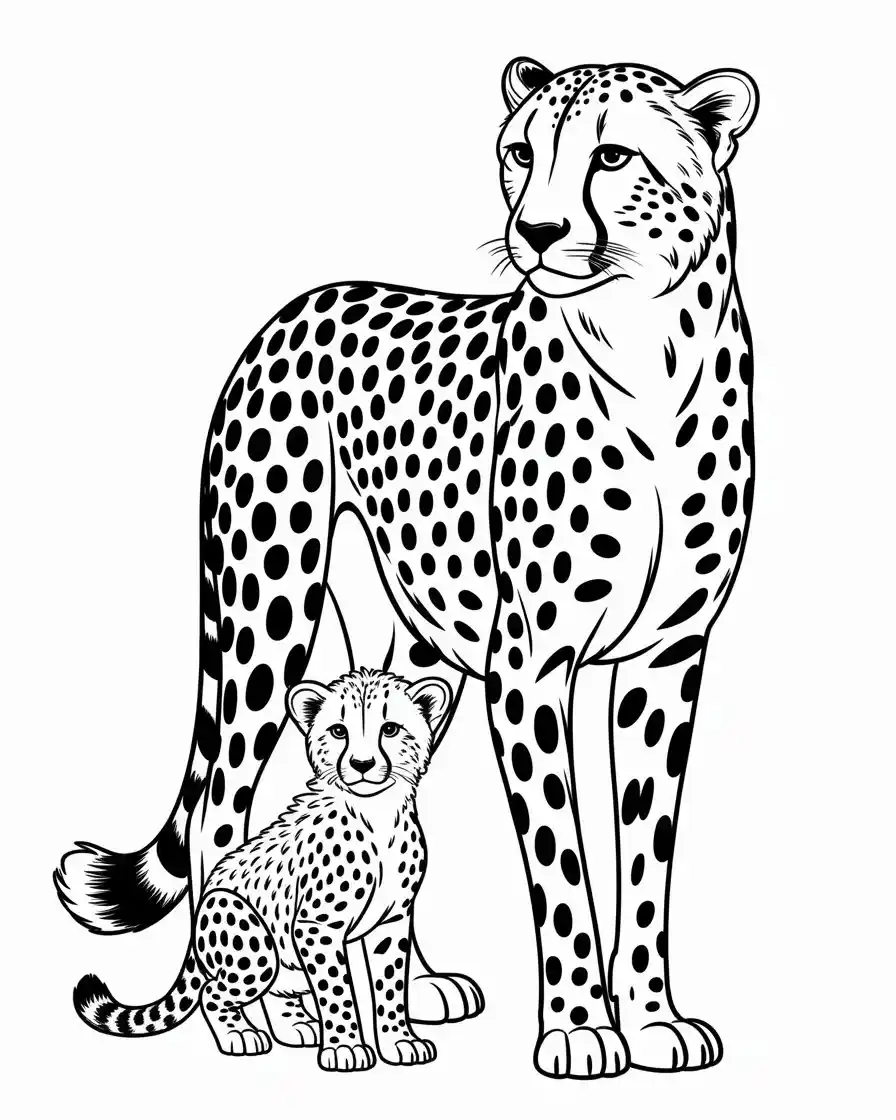
Cheetah Cubs, Smaller, softer proportions that suit a gentler, less intense design, popular for younger kids who prefer a baby animal theme over an action pose.
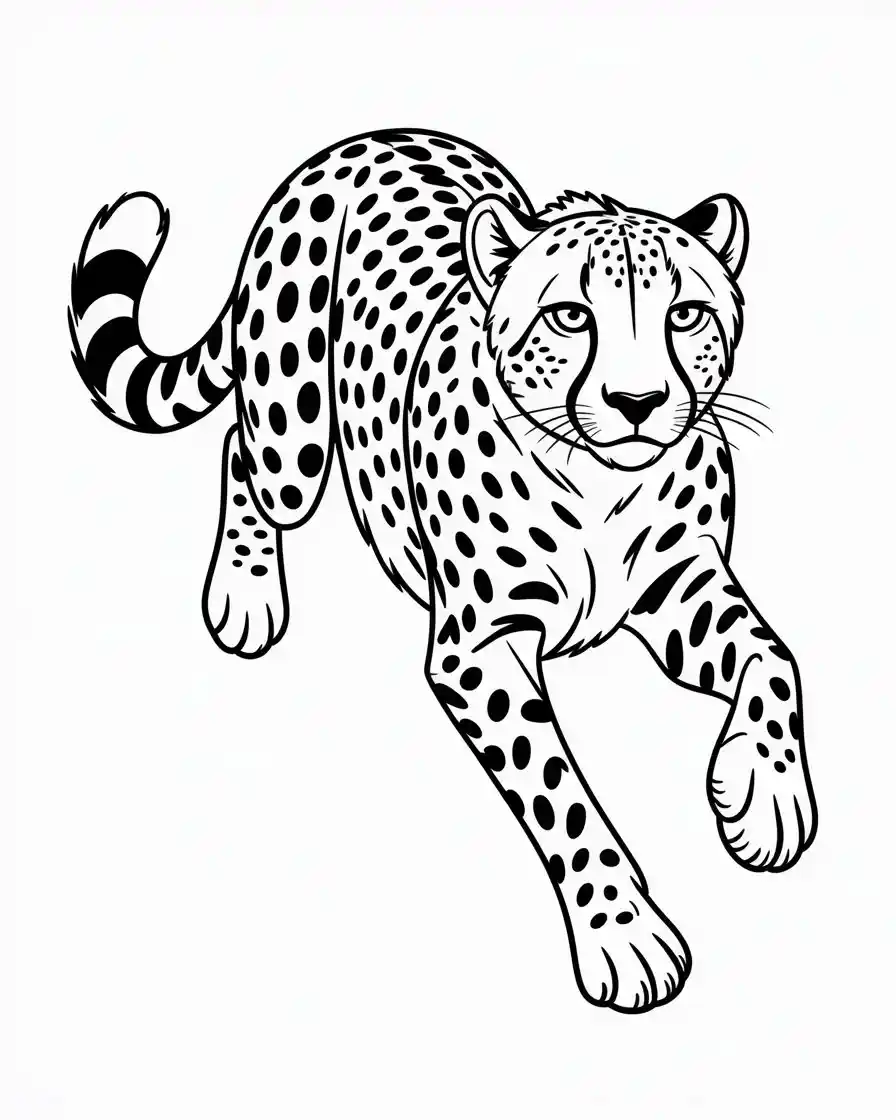
Cheetah in Motion, Designs that capture the running, leaping poses the animal is famous for, which tend to appeal most to kids already interested in speed and wildlife.
Mandala and Pattern Designs, A cheetah face or silhouette worked into a symmetrical, detailed pattern, built for teens and adults who want a calmer, more meditative coloring session.
A Practical Guide to Coloring the Spots
The spots are usually what make or break how a finished cheetah page looks, so a little technique helps. Rather than coloring every spot pure black, try a very dark brown or charcoal gray instead, since it reads as black from a normal viewing distance but gives the page a softer, less flat appearance. For the base coat, a warm tan or light gold works better than a plain yellow and matches the animal’s natural coloring more closely. Older kids attempting a realistic design can try leaving a thin uncolored ring around each spot before filling it in, which mimics the slightly lighter fur that surrounds a cheetah’s actual markings.
Markers give bold, saturated spots quickly, which works well for younger children who want a fast, satisfying result, while colored pencils allow more control for blending the base coat and adding subtle shading around the muscles and legs.
More Cheetah Facts Worth Knowing
Beyond speed and spots, a handful of other details make good conversation starters during a coloring session. Cheetah cubs are born with a smoky gray coat and a thick mane running down their backs, a feature that fades as they grow and is thought to help camouflage them among dry grass while they’re too young and slow to outrun predators. Cheetahs have a naturally small skull and reduced jaw strength compared to other big cats, a trade-off that comes from evolving a lighter frame built for speed rather than raw power. Unlike most big cats, cheetahs cannot fully retract their claws, which function almost like a sprinter’s cleats, giving them extra grip during a high-speed chase. Sharing a detail like this while a child works through the spots turns a simple coloring session into a small wildlife lesson without it feeling like a lecture.
Picking the Right Cheetah Design for the Moment
Not everyone printing this collection is after the same thing. Someone looking for a free design for a quiet afternoon usually just wants something simple to grab and go, while a teacher preparing a classroom set wants pages that photocopy cleanly in black and white without losing detail. Parents of toddlers tend to head straight for the cute, simplified styles, since the bold outlines and reduced spot count are easier for small hands to manage, while older kids and adults searching for something more advanced usually get more out of the realistic and mandala sections, which reward a slower, more detailed session. Keeping cheetah coloring pages organized by style rather than as one long, unsorted list makes it easier to land on the right design the first time.
Best Cheetah Designs by Age Group
| Age Group | Best Fit | Why |
| 2–4 years | Cute Cheetah Pages | Simple, rounded shapes suit early crayon grip |
| 5–8 years | Cheetah Cubs or Cheetah in Motion | Familiar, engaging subject holds attention |
| 9–12 years | Realistic Cheetah Designs | Detailed spots reward developing patience |
| Teens & Adults | Mandala and Pattern Designs | Intricate detail supports a longer, calmer session |
Cheetah vs. Leopard: A Comparison Worth Knowing
These two big cats get mixed up constantly, so it’s worth explaining the difference while coloring. The clearest visual clue is the spots themselves: a cheetah has small, solid black spots scattered fairly evenly, while a leopard has rosette-shaped spots that look more like open rings with a darker center. Build is another giveaway, cheetahs have a slim, athletic frame built for speed, with a small head and long legs, while leopards are stockier and more muscular, built for strength and climbing rather than sprinting. Cheetahs also hunt during the day and rely on raw speed to chase down prey in open grassland, while leopards are largely nocturnal, ambush hunters that often drag their kills up into trees. Pointing out the spot shape alone is usually enough for a child to correctly identify either animal from then on.
Why Cheetahs Deserve a Bit of Extra Attention
Beyond being a fun subject to draw, cheetahs are classified as a vulnerable species by the IUCN Red List, with global numbers estimated at fewer than 7,000 mature individuals remaining in the wild. According to the World Wildlife Fund, cheetahs now occupy only around 10% of the range they historically covered across Africa and Asia, largely due to habitat loss and declining prey populations. Coloring cheetah coloring pages alongside a short conversation about conservation gives the activity a bit of extra weight without turning it into a heavy topic, especially for kids who are already drawn to wildlife and animal facts. Many schools use printable cheetah coloring pages exactly this way, pairing the art with a short discussion of endangered species as part of a broader animal or geography unit
The Developmental Side of Coloring
Coloring offers more than a way to pass an afternoon quietly. For younger children, the act of holding a crayon and staying within an outline builds the same fine motor control and grip strength used later for handwriting, which is part of why the activity shows up so often in preschool routines. Choosing colors and working through dozens of small spots also demands a level of sustained focus that’s genuinely useful practice for a young attention span. For teens and adults, working through detailed cheetah coloring pages offers a different kind of value; the repetitive, low-stakes nature of filling in a mandala or realistic scene is widely used as a simple, accessible way to unwind.
What Kids Do With a Finished Cheetah
A colored cheetah design doesn’t have to end up in a drawer. Younger kids often enjoy cutting out a favorite finished cub design to use as a bookmark, while a full running-pose page works well pinned to a bedroom wall or used as part of a wildlife-themed birthday party display. Teachers often print cheetah coloring pages for a full class, having each student color their own and grouping the results together into an easy, low-effort bulletin board for an animal habitat or African wildlife unit, which naturally opens a conversation about speed, camouflage, and how different predators hunt.
A Quick Word on Printing
Print at 100% scale rather than “fit to page” to avoid thinning out the fine detail in the spots and whiskers. Standard printer paper is fine for crayon or light pencil work, but cardstock holds up much better if markers, paint, or watercolor pencils are involved, since thinner paper tends to let ink bleed through quickly. All cheetah coloring pages in this set are formatted for both US Letter and A4 paper without any stretching or cropping.
Frequently asked questions About Cheetah coloring pages
Explore More Animal Coloring Pages
If you enjoyed this collection, a few related pages worth checking out include [Tiger Coloring Pages], [Lion Coloring Pages], [Koala Coloring Pages], and [Capybara Coloring Pages], all free, printable, and ready to download.
New cheetah coloring pages are added to this collection periodically, so it’s worth bookmarking if today’s selection doesn’t include quite the right pose or style. Whether it’s a quick cub design for a five-minute break or a full realistic scene for a longer, quieter afternoon, the goal stays the same: a reliable set of free, print-ready designs that families, teachers, and wildlife fans of any age can return to whenever they need one.